Table of Contents
- Introduction
- Why Butter is Important in Baking
- Unsalted Butter
- Salted Butter
- European-Style Butter
- Cultured Butter
- Clarified Butter
- Ghee
- Whipped Butter
- Organic Butter
- Grass-Fed Butter
- Vegan Butter
- Compound Butter
- Which Butter is Best for Cakes?
- Which Butter is Best for Cookies?
- How to Store Butter Properly
- Frequently Asked Questions
- Conclusion
Types of Butter Used in Baking play a crucial role in determining the flavor, texture, moisture, and overall quality of baked goods. Whether you’re baking a classic vanilla cake, chewy cookies, flaky croissants, or rich brownies, the type of butter you choose can significantly impact the final result. While many people assume all butter is the same, there are several varieties available, each with unique characteristics that make it suitable for specific baking applications.
Understanding the different types of butter used in baking can help both beginner and professional bakers achieve better results in the kitchen. From unsalted and salted butter to premium European-style butter and dairy-free vegan alternatives, each variety offers distinct benefits. In this comprehensive guide, we’ll explore the most popular types of butter used in baking, their advantages, ideal uses, and tips for selecting the best butter for cakes, cookies, pastries, and other delicious treats.
Why Butter is Important in Baking
Understanding the types of butter used in baking can help bakers choose the right ingredient for every recipe. Different butters affect texture, flavor, moisture, and structure, making it important to know which option works best for cakes, cookies, pastries, and breads.
Butter does much more than add flavor to baked goods. It performs several important functions that directly affect the outcome of a recipe.
Flavor Enhancement
Butter provides a rich, creamy taste that cannot easily be replicated by other fats. The natural milk solids in butter contribute to its distinctive flavor profile, making cakes, cookies, and pastries more delicious.
Texture Development
Butter influences the texture of baked goods by creating tenderness and softness. When creamed with sugar, butter traps air, helping cakes become light and fluffy.
Moisture Retention
Butter contains approximately 80% fat and 15–18% water. This composition helps baked goods remain moist and prevents them from becoming dry.
Leavening Support
During the creaming process, butter traps tiny air pockets. These pockets expand during baking, contributing to the rise and structure of cakes and cookies.
Browning and Appearance
The milk solids present in butter help baked goods develop an attractive golden-brown color and appealing crust.
Unsalted Butter
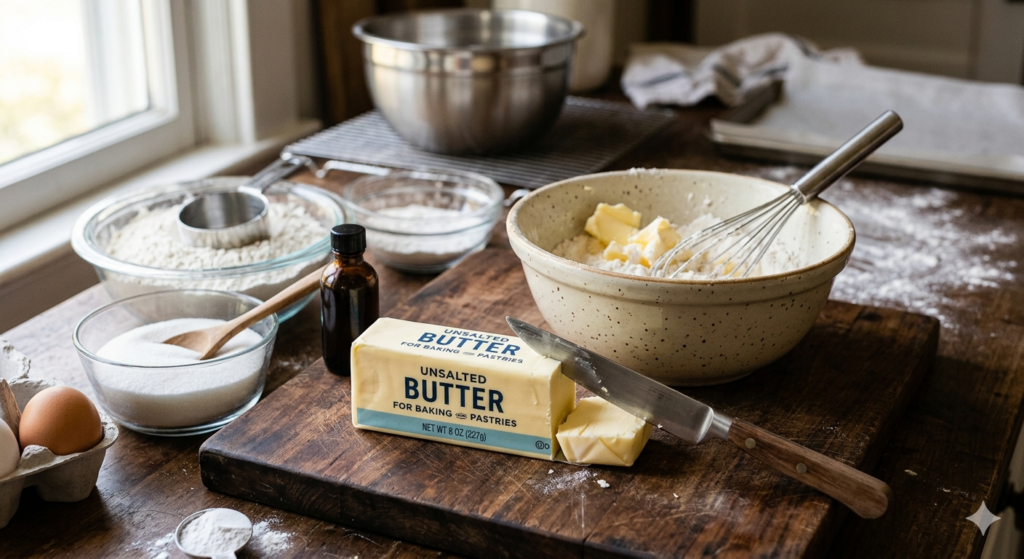
Among the many types of butter used in baking, unsalted butter is the preferred choice for professional bakers because it provides complete control over the recipe’s salt content. Unsalted butter is the most commonly recommended butter for baking. As the name suggests, it contains no added salt.
Characteristics
- Pure cream flavor
- Approximately 80% butterfat
- No added salt
- Fresh taste
- Consistent composition
Why Bakers Prefer Unsalted Butter
Professional bakers often choose unsalted butter because it allows complete control over the amount of salt in a recipe. Different brands of salted butter may contain varying levels of salt, which can affect flavor consistency.
Best Uses
Unsalted butter works exceptionally well for:
- Cakes
- Cupcakes
- Cookies
- Brownies
- Buttercream frosting
- Pastries
- Muffins
Advantages
- Better control over recipe seasoning
- Cleaner butter flavor
- More predictable baking results
Disadvantages
- Slightly shorter shelf life than salted butter
Salted Butter
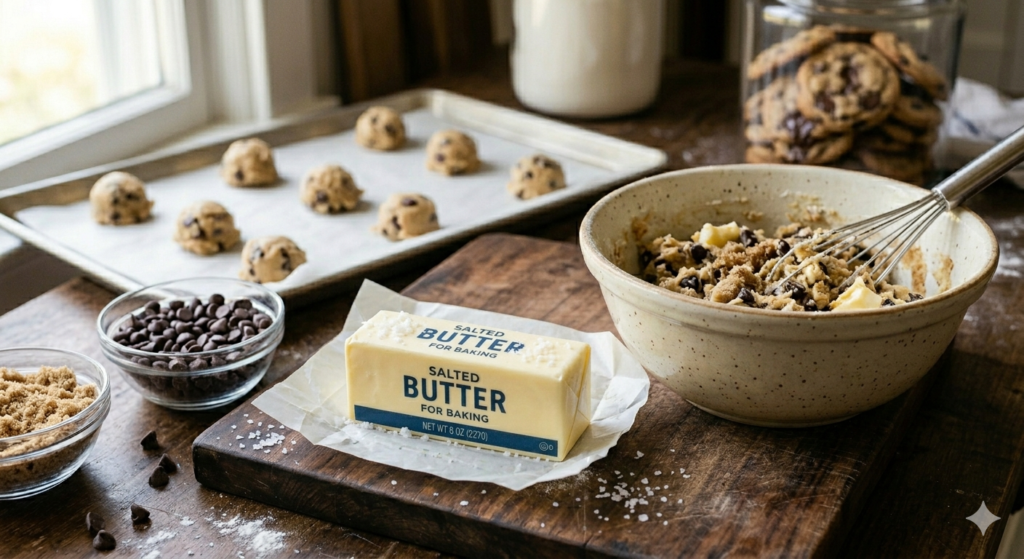
Salted butter is one of the most widely available types of butter used in baking and contains added salt to enhance flavor and extend shelf life. While many professional bakers prefer unsalted butter for precise control over recipe seasoning, salted butter can still be a valuable ingredient in many baking applications.
Characteristics
- Rich buttery taste
- Added salt content
- Longer shelf life
- Widely available
When to Use Salted Butter
Salted butter can be used in baking when a recipe specifically calls for it or when unsalted butter isn’t available. However, it’s important to reduce the additional salt in the recipe to avoid overly salty baked goods.
Best Uses
Salted butter is suitable for:
- Simple cookies
- Quick breads
- Biscuits
- Homemade crackers
Advantages
- Longer shelf life
- Convenient for everyday use
- Enhanced flavor
Disadvantages
- Less control over salt levels
- Salt content varies by brand
Baking Tip
If substituting salted butter for unsalted butter, reduce the recipe’s added salt by approximately ¼ teaspoon for every ½ cup of butter used.
European-Style Butter
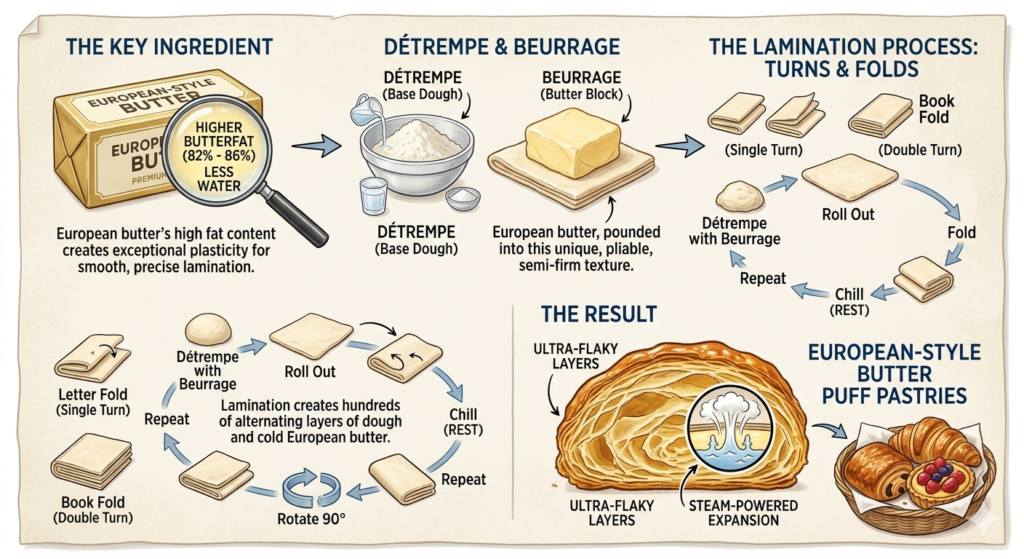
European-style butter is one of the premium types of butter used in baking due to its higher butterfat content and rich flavor. European-style butter is considered a premium butter due to its higher butterfat content.
Characteristics
- Typically contains 82–86% butterfat
- Lower water content
- Rich, creamy texture
- Intense buttery flavor
Why Bakers Love It
The higher fat content creates richer pastries, flakier pie crusts, and more flavorful baked goods. Less water means reduced gluten development, resulting in more tender products.
Best Uses
European-style butter is ideal for:
- Croissants
- Danish pastries
- Puff pastry
- Pie crusts
- Shortbread cookies
- Gourmet cakes
Advantages
- Superior flavor
- Improved texture
- Better lamination for pastries
Disadvantages
- More expensive
- Not always readily available
Professional Baking Tip
If you’re making croissants or laminated dough, European-style butter can dramatically improve the final texture and flakiness.
Cultured Butter
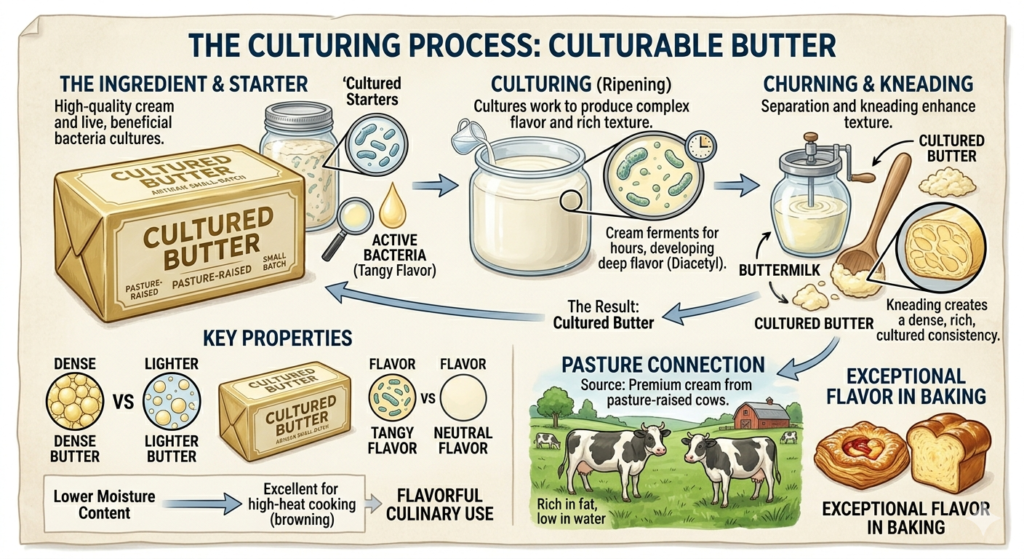
Cultured butter is made by fermenting cream with beneficial bacterial cultures before churning.
Characteristics
- Slightly tangy flavor
- Complex aroma
- Creamier texture
- Traditional European-style production
How It Differs from Regular Butter
The fermentation process creates additional flavor compounds that give cultured butter a deeper, more sophisticated taste compared to standard butter.
Best Uses
Cultured butter works wonderfully in:
- Shortbread
- Pound cakes
- Scones
- Brioche
- Artisan pastries
Advantages
- Exceptional flavor
- Rich aroma
- Premium baking ingredient
Disadvantages
- Higher price
- Limited availability
Flavor Profile
Many bakers describe cultured butter as having subtle notes of yogurt, cheese, or cream, which enhance baked goods without overpowering them.
Clarified Butter
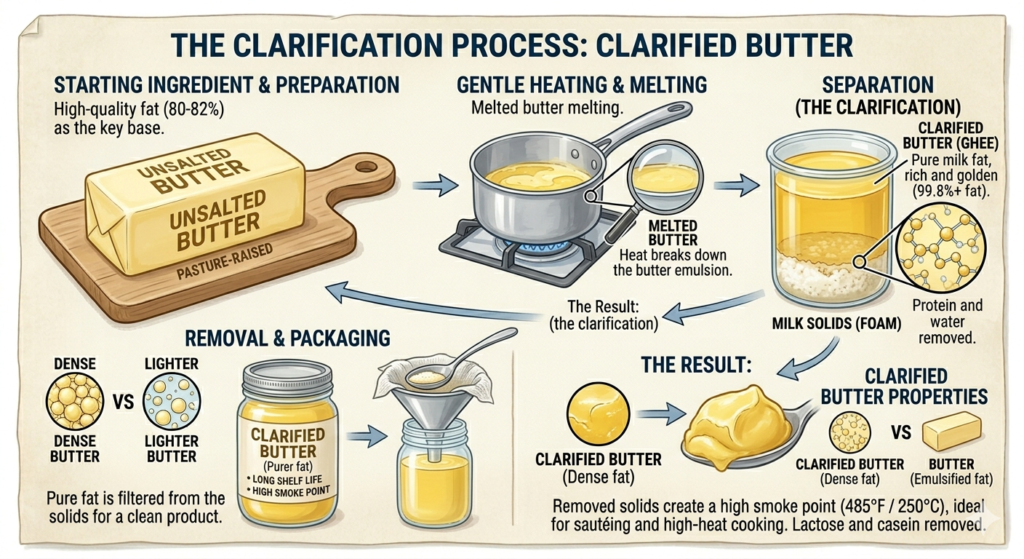
Clarified butter is one of the specialized types of butter used in baking and is created by removing water and milk solids from regular butter, leaving behind pure butterfat. This process results in a rich, golden butter product with a higher fat content and a longer shelf life compared to regular butter.
Among the various types of butter used in baking, clarified butter is known for its smooth texture, concentrated buttery flavor, and high heat stability. Since it contains almost no water, it can help create crispier and flakier baked goods, making it a popular choice for certain pastries, pie crusts, and specialty cookies.
One of the key advantages of clarified butter is its purity. Unlike regular butter, which contains water and milk solids, clarified butter consists almost entirely of butterfat. This makes it one of the unique types of butter used in baking for recipes that require precise control over moisture and texture.
Bakers often use clarified butter when they want to enhance flavor without introducing additional water into the recipe. As one of the premium types of butter used in baking, clarified butter can contribute to richer-tasting pastries and baked treats while providing greater flexibility in high-temperature baking applications.
Whether you’re making flaky pie crusts, delicate pastries, or experimenting with new baking techniques, clarified butter is one of the versatile types of butter used in baking that can help achieve exceptional texture and flavor.
Characteristics
- Nearly 100% fat
- No milk solids
- Higher smoke point
- Golden appearance
How It’s Made
Butter is gently heated until the milk solids separate from the fat. The pure fat is then strained and collected.
Best Uses
Clarified butter is suitable for:
- Certain pastry recipes
- Specialty cookies
- Brushing baked goods
- Savory baking applications
Advantages
- Longer shelf life
- High heat stability
- Pure butter flavor
Disadvantages
- Lacks the milk solids that contribute to browning
- Not ideal for all baking recipes
Baking Considerations
Since clarified butter lacks water, substituting it directly for regular butter may require recipe adjustments.
Ghee
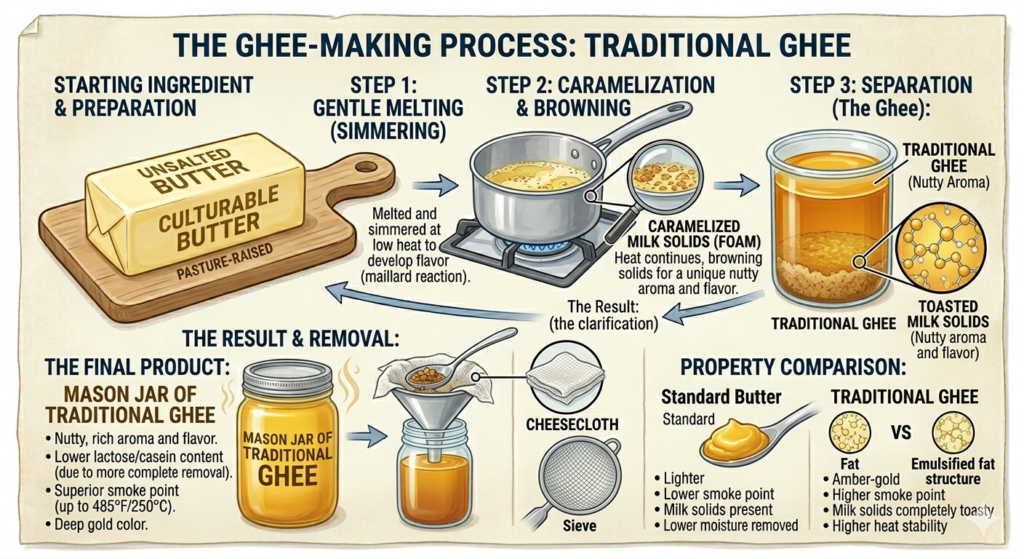
Ghee is one of the traditional types of butter used in baking and is a form of clarified butter that is cooked longer, allowing the milk solids to caramelize before removal. This extended cooking process gives ghee its distinctive nutty aroma, rich flavor, and deep golden color, making it a unique ingredient for both sweet and savory baked goods.
Among the various types of butter used in baking, ghee is highly valued for its intense buttery taste and versatility. The caramelization of milk solids creates a depth of flavor that can enhance cookies, cakes, pastries, and traditional desserts. Many bakers use ghee to add richness and a subtle nutty note that regular butter cannot provide.
As one of the most flavorful types of butter used in baking, ghee contains very little moisture and has a longer shelf life than regular butter. This makes it a convenient option for bakers who want a stable ingredient with a concentrated butter flavor.
Whether you’re preparing shortbread cookies, spiced cakes, or traditional Indian sweets, ghee is one of the specialized types of butter used in baking that can elevate the taste and aroma of your baked creations while providing a unique twist on classic recipes.
Characteristics
- Nutty aroma
- Deep golden color
- Rich flavor
- Lactose-free for many individuals
Popularity in Baking
Although commonly used in Indian cooking, ghee has gained popularity among bakers due to its unique flavor and versatility.
Best Uses
Ghee works well in:
- Cookies
- Tea cakes
- Traditional Indian desserts
- Spiced cakes
- Shortbread
Advantages
- Distinctive flavor
- Long shelf life
- Stable at high temperatures
Disadvantages
- Strong flavor may not suit every recipe
- More expensive than regular butter
Pro Tip
Try replacing a portion of regular butter with ghee in cookie recipes for a richer, nuttier flavor profile.
Whipped Butter
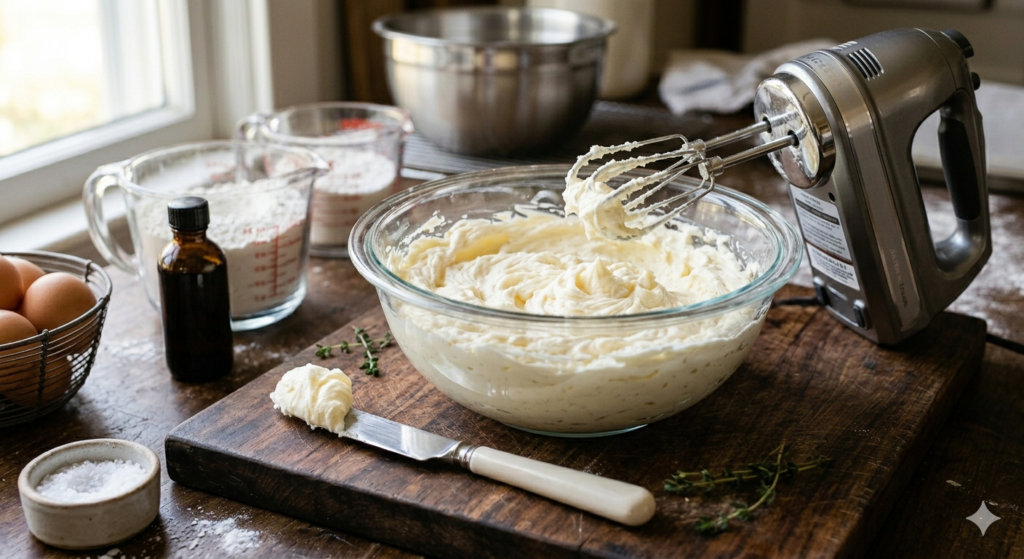
Whipped butter is a type of butter that has been aerated by incorporating air during the manufacturing process. This creates a lighter, fluffier texture that is easier to spread than traditional butter. While whipped butter is excellent for spreading on bread, toast, and muffins, it is generally not the best choice for precise baking recipes.
Characteristics of Whipped Butter
- Light and airy texture
- Easy to spread directly from the refrigerator
- Contains added air
- Lower density than regular butter
Best Uses
- Toast and bread
- Pancakes and waffles
- Topping baked goods
- Quick dessert garnishes
Baking Considerations
Because whipped butter contains air, measuring it by volume can lead to inaccurate results in baking recipes. For consistent baking outcomes, most recipes recommend using regular unsalted butter instead.
Organic Butter
Organic butter is one of the most popular types of butter used in baking among health-conscious bakers and those who prefer natural ingredients. It is produced from the milk of cows raised according to organic farming standards. These cows are typically fed organic feed and are not treated with synthetic hormones or antibiotics, resulting in a more natural dairy product.
Among the various types of butter used in baking, organic butter is valued for its pure flavor, high-quality ingredients, and environmentally friendly production methods. It performs similarly to conventional butter in cakes, cookies, pastries, and frostings while offering the added benefit of organic certification.
Many bakers choose organic butter because they believe it contributes to cleaner, more wholesome baked goods. As one of the premium types of butter used in baking, organic butter can enhance the flavor and quality of recipes while aligning with organic and sustainable food preferences.
Whether you’re baking a birthday cake, batch of cookies, or homemade pastries, organic butter is one of the versatile types of butter used in baking that delivers excellent texture, rich flavor, and reliable results.
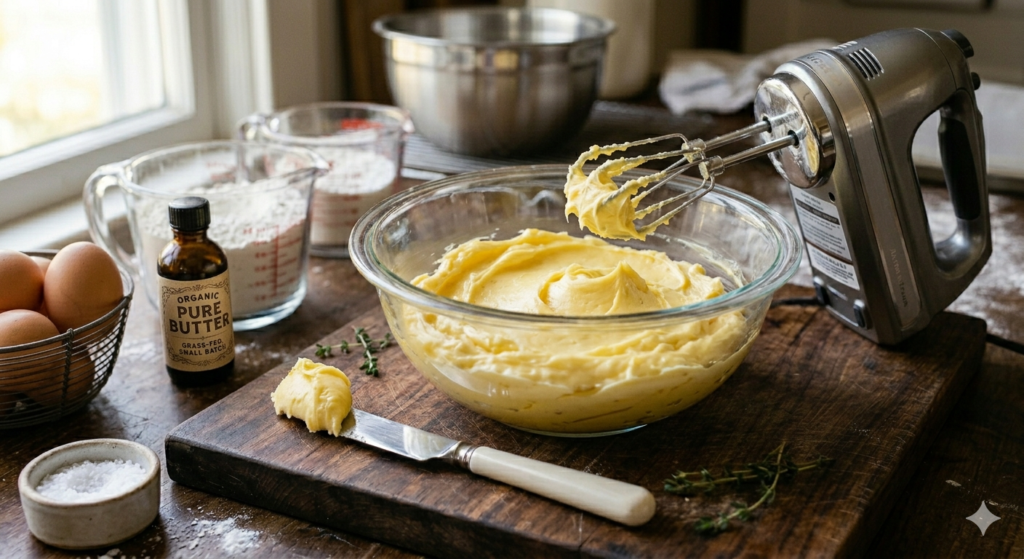
Characteristics of Organic Butter
- Produced from organic milk
- Free from artificial growth hormones
- Rich, natural flavor
- Available in salted and unsalted varieties
Benefits for Baking
Many bakers choose organic butter because of its natural production process and premium quality. Organic butter performs similarly to conventional butter while offering peace of mind to those who prefer organic ingredients.
Best Uses
- Cakes
- Cookies
- Cupcakes
- Brownies
- Frostings
Advantages
- High-quality ingredient
- Natural production methods
- Excellent flavor
Disadvantages
- Higher cost compared to conventional butter
Grass-Fed Butter
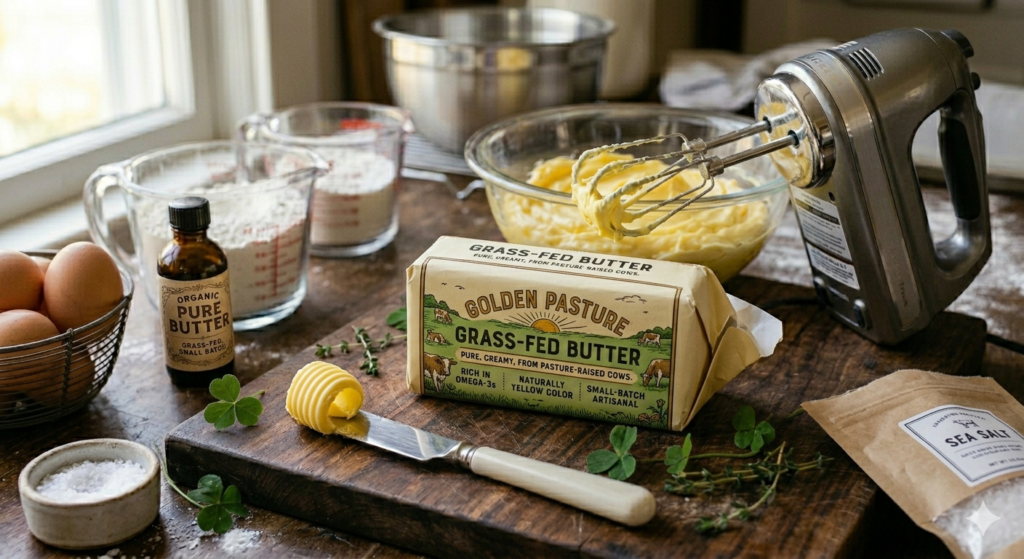
Grass-fed butter is one of the premium types of butter used in baking and comes from cows that primarily graze on grass rather than grain-based feeds. This type of butter has gained popularity among home bakers and professionals due to its rich flavor, creamy texture, and distinctive golden color. Among the various types of butter used in baking, grass-fed butter is often preferred for recipes where the buttery flavor is meant to stand out, such as cookies, pound cakes, shortbread, and pastries.
The natural diet of grass-fed cows contributes to the butter’s enhanced taste and appealing appearance, making it a favorite choice for bakers who want to elevate the quality of their baked goods. As one of the most flavorful types of butter used in baking, grass-fed butter can add depth, richness, and a luxurious mouthfeel to a wide range of desserts and baked treats.
Characteristics of Grass-Fed Butter
- Deep yellow color
- Rich buttery flavor
- Smooth texture
- Higher levels of beneficial nutrients
Why Bakers Love It
Grass-fed butter often delivers a more pronounced buttery taste, making it ideal for recipes where butter is the star ingredient.
Best Uses
- Shortbread cookies
- Pound cakes
- Butter cookies
- Croissants
- Pie crusts
Advantages
- Rich flavor profile
- Beautiful color
- Premium baking ingredient
Disadvantages
- More expensive
- Availability may vary by location
Vegan Butter
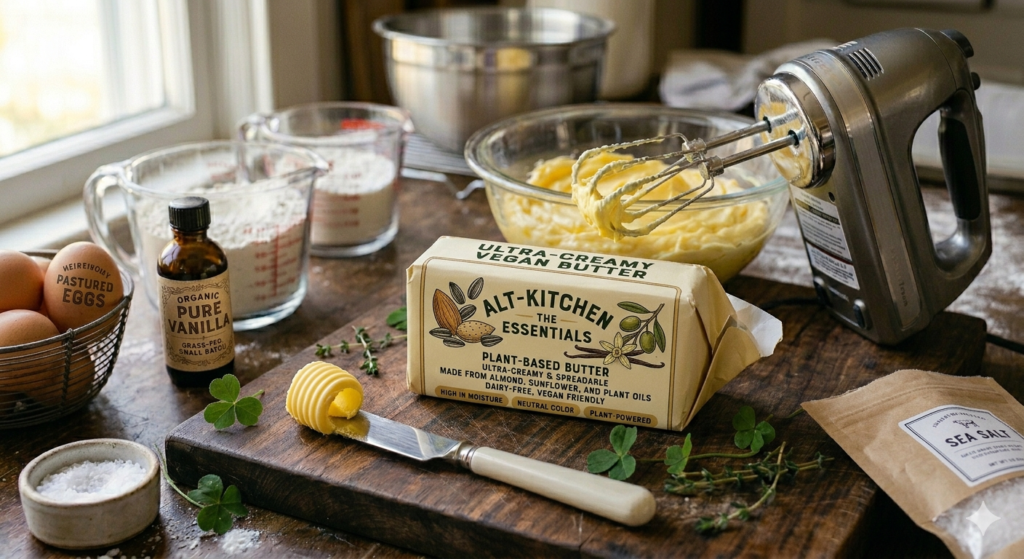
Modern vegan alternatives have become popular types of butter used in baking for people following dairy-free or plant-based diets. Vegan butter is a dairy-free alternative made from plant-based oils such as coconut, avocado, sunflower, or olive oil. It is designed to mimic the taste and functionality of traditional butter.
Characteristics of Vegan Butter
- Dairy-free
- Plant-based ingredients
- Available in sticks and tubs
- Suitable for vegan diets
Baking Performance
Modern vegan butters perform remarkably well in many baking applications, making them a popular choice for those with dairy allergies or dietary preferences.
Best Uses
- Vegan cakes
- Cookies
- Muffins
- Brownies
- Frostings
Advantages
- Suitable for dairy-free baking
- Widely available
- Easy substitution for traditional butter
Disadvantages
- Flavor varies by brand
- Some products may contain higher water content
Baking Tip
Choose vegan butter specifically formulated for baking rather than spreadable vegan margarine for the best results.
Compound Butter
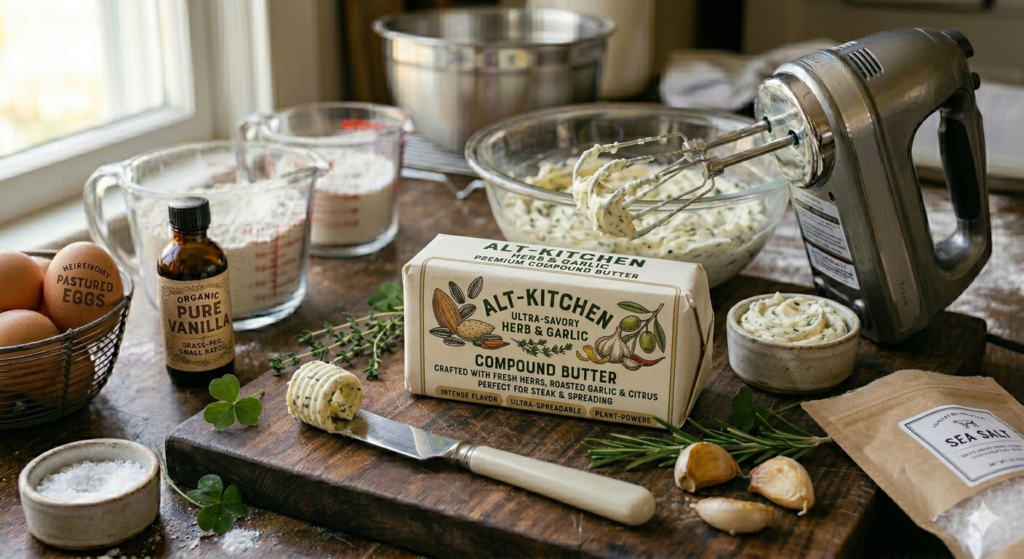
Compound butter is one types of butter regular butter mixed with additional ingredients such as herbs, spices, fruit zest, honey, or flavorings. While commonly used in cooking, certain sweet compound butters can enhance baked goods.
Characteristics of Compound Butter
- Flavored butter mixture
- Customizable ingredients
- Sweet or savory varieties
- Rich flavor enhancement
Sweet Compound Butter Ideas
- Honey butter
- Cinnamon butter
- Vanilla butter
- Orange zest butter
- Maple butter
Best Uses
- Sweet rolls
- Scones
- Biscuits
- Breakfast pastries
- Specialty desserts
Advantages
- Adds unique flavors
- Easy to prepare
- Versatile ingredient
Disadvantages
- Not suitable for all baking recipes
- Additional ingredients may affect texture
Which Butter is Best for Cakes?
After exploring the various types of butter used in baking, many bakers wonder which option works best for cakes. The answer depends on the desired flavor and texture, but unsalted butter remains the most recommended choice. Among all the types of butter used in baking, unsalted butter offers the best control over salt content and produces consistent results. European-style butter is another excellent option for bakers seeking richer flavor and a softer crumb structure.
Best Choice: Unsalted Butter
Unsalted butter remains the preferred option for most cake recipes because it provides:
- Consistent results
- Full control over salt levels
- Excellent flavor
- Reliable texture
Premium Choice: European-Style Butter
For richer cakes with a luxurious crumb, European-style butter is an excellent upgrade due to its higher butterfat content.
Suitable Alternatives
- Organic butter
- Grass-fed butter
- Vegan butter (for dairy-free cakes)
Recommended for Cakes
- Unsalted Butter
- European-Style Butter
- Grass-Fed Butter
- Organic Butter
- Vegan Butter
After exploring the various types of butter used in baking, it’s clear that each variety offers unique benefits depending on the recipe and desired outcome.
Which Butter is Best for Cookies?
When comparing the different types of butter used in baking, unsalted butter is often the preferred choice for cookies. It allows bakers to maintain precise ingredient measurements while delivering a rich buttery flavor. European-style and grass-fed butter are also popular types of butter used in baking for cookies because they enhance flavor and create a tender texture. Cookies rely heavily on butter for flavor, spread, texture, and chewiness. The best butter depends on the type of cookie you want to create.
Best Overall Choice: Unsalted Butter
Unsalted butter offers predictable results and works well in nearly every cookie recipe.
Best Flavor: Grass-Fed Butter
Grass-fed butter provides a richer buttery flavor that shines in simple cookies such as shortbread and butter cookies.
Best Texture: European-Style Butter
The higher butterfat content helps create tender, flavorful cookies with a luxurious mouthfeel.
Recommended for Cookies
- Unsalted Butter
- European-Style Butter
- Grass-Fed Butter
- Cultured Butter
- Organic Butter
How to Store Butter Properly
Regardless of the types of butter used in baking, proper storage is essential for maintaining freshness, flavour and quality. Whether you use unsalted, salted, European-style, or vegan butter, storing it correctly helps preserve flavor and prevents spoilage.
Refrigeration
Store butter in its original packaging or an airtight container in the refrigerator. Properly refrigerated butter can last several weeks.
Freezing
Butter freezes exceptionally well. Wrap it tightly and store it in the freezer for up to several months.
Protect from Odors
Butter can absorb odors from nearby foods. Always keep it sealed and away from strong-smelling ingredients.
Avoid Temperature Fluctuations
Repeated warming and cooling can affect texture and quality. Only leave out the amount needed for immediate use.
Room Temperature Storage
Butter can remain at room temperature for short periods if kept in a covered butter dish and used quickly.
Frequently Asked Questions
1. What is the best butter for baking cakes?
Unsalted butter is generally considered the best option because it provides consistent flavor and allows bakers to control salt levels.
2. Can I use salted butter instead of unsalted butter?
Yes. Simply reduce the additional salt in the recipe to avoid overly salty baked goods.
3. Why do professional bakers prefer unsalted butter?
Unsalted butter offers better consistency and allows precise control over recipe formulation.
4. Is European-style butter worth the extra cost?
For pastries, croissants, pie crusts, and premium desserts, European-style butter often delivers superior flavor and texture.
5. Can vegan butter replace regular butter in baking?
Yes. Most high-quality vegan baking butters can be substituted in a 1:1 ratio in many recipes.
6. What butter is best for cookies?
Unsalted butter is the most versatile option, while European-style and grass-fed butter can provide enhanced flavor.
7. Does butter affect cake texture?
Absolutely. Butter influences tenderness, moisture, structure, and overall mouthfeel.
8. How long can butter be stored in the freezer?
Properly wrapped butter can maintain quality for several months when frozen.
Conclusion
The types of butter used in baking can dramatically influence the flavor, texture, appearance, and overall quality of your baked goods. From classic unsalted butter and convenient salted butter to premium European-style, cultured, grass-fed, and vegan alternatives, each variety offers unique advantages for different recipes.
Understanding the various types of butter used in baking allows bakers to make informed choices based on the desired outcome. Unsalted butter remains the gold standard for most cakes and cookies, while European-style butter excels in pastries and gourmet desserts. Grass-fed and organic butters offer enhanced flavor, while vegan butter provides a reliable dairy-free option.
Whether you’re a beginner baker or a professional cake artist, learning about the different types of butter used in baking will help you create better cakes, cookies, pastries, and desserts. By selecting the right butter for each recipe and storing it properly, you can achieve consistently delicious results and elevate your baking to the next level.