A Complete Guide for Beginners and Baking Businesses
Introduction
Understanding OTG vs Oven for Home Bakers is essential before investing in baking equipment. The right appliance can improve baking consistency, save time, and help you achieve professional-quality cakes and cookies at home.
OTG vs Oven for Home Bakers is one of the most common comparisons made by beginner and professional bakers when choosing the right baking appliance. Whether you’re planning to bake cakes, cookies, brownies, breads, or start a home baking business, selecting the right equipment can significantly impact your baking results. Both OTGs and ovens have their own advantages, features, and limitations, making it important to understand how they differ before making a purchase.
Many home bakers struggle to decide between an OTG and an oven because both appliances can be used for baking. However, factors such as temperature control, baking performance, capacity, energy consumption, and overall cost play a major role in determining which option is best suited for your needs. Understanding these differences can help you invest wisely and achieve better baking outcomes.
In this comprehensive guide, we’ll explore OTG vs Oven for Home Bakers, compare their features, discuss their pros and cons, and help you determine which appliance is the best choice for your baking journey.
What Is an OTG?
When discussing OTG vs Oven for Home Bakers, OTGs are often preferred by baking enthusiasts because they provide better control over temperature and heating elements, resulting in more consistent baking outcomes.
OTG stands for Oven Toaster Griller. It is a compact electric appliance designed for baking, toasting, grilling, and roasting food. OTGs use heating rods placed at the top and bottom of the appliance to generate heat.
Unlike microwave ovens, OTGs are specifically designed for traditional baking. Most OTGs come with adjustable temperature controls, timers, baking trays, wire racks, and grilling accessories.
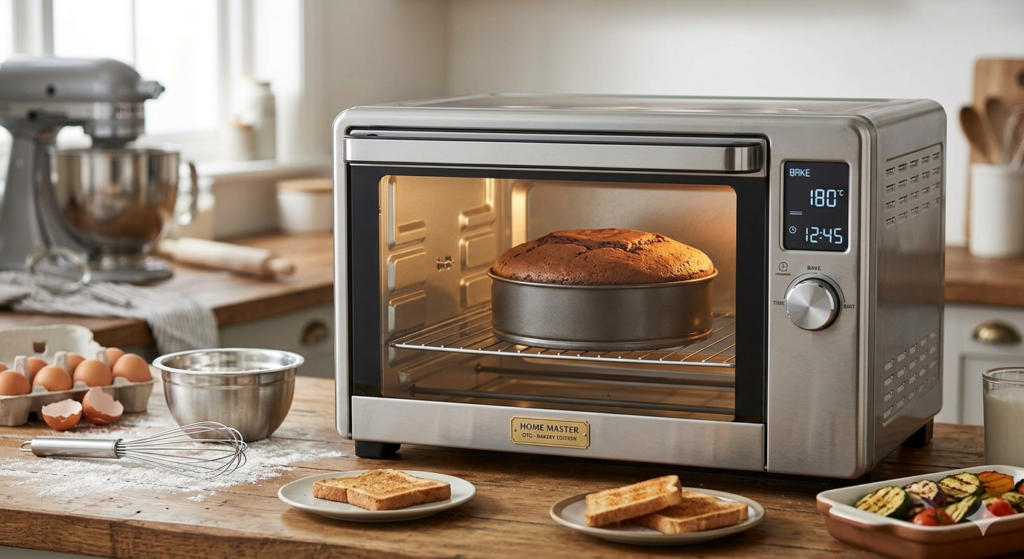
Key Features of an OTG
- Top and bottom heating elements
- Adjustable temperature settings
- Baking, grilling, and toasting functions
- Compact design
- Affordable pricing
- Ideal for cakes and cookies
OTGs are widely used by home bakers because they offer excellent control over baking temperatures and produce consistent results.
For detailed baking techniques and oven usage, refer to:
What Is an Oven?
The comparison of OTG vs Oven for Home Bakers becomes important when choosing between baking-focused performance and multifunctional convenience. Convection ovens offer versatility, while OTGs focus primarily on baking quality.
The term “oven” can refer to several types of appliances. In home kitchens, people often mean a convection microwave oven when they say “oven.”
A convection oven uses a fan to circulate hot air throughout the cooking chamber. This helps food cook more evenly compared to traditional heating methods.
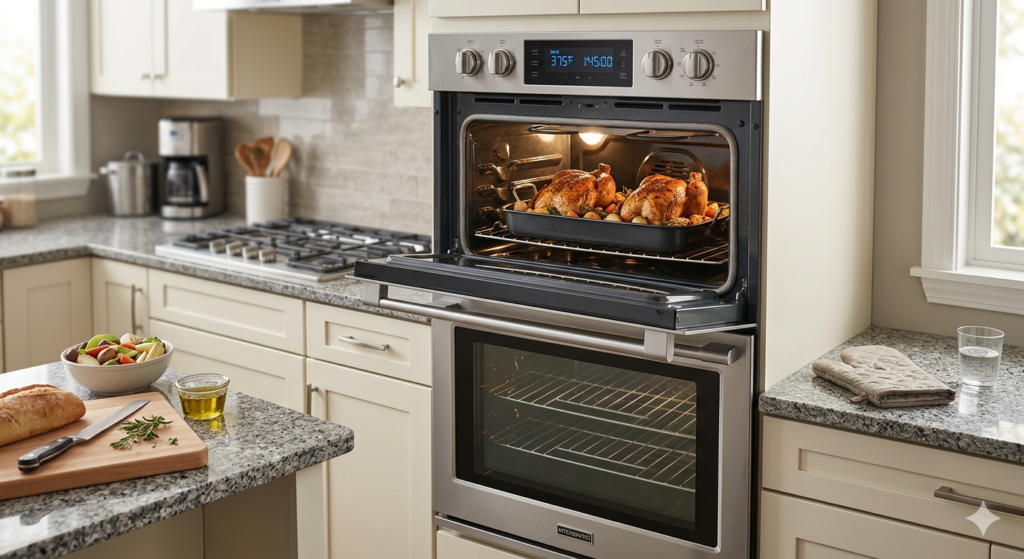
Key Features of a Convection Oven
- Multiple cooking modes
- Baking capabilities
- Microwave functionality
- Defrosting and reheating options
- Space-saving design
- Faster cooking times
Convection ovens are versatile appliances that combine several kitchen functions into a single unit.
Understanding the Difference Between OTG and Oven
Although both appliances can bake cakes and cookies, they operate differently.
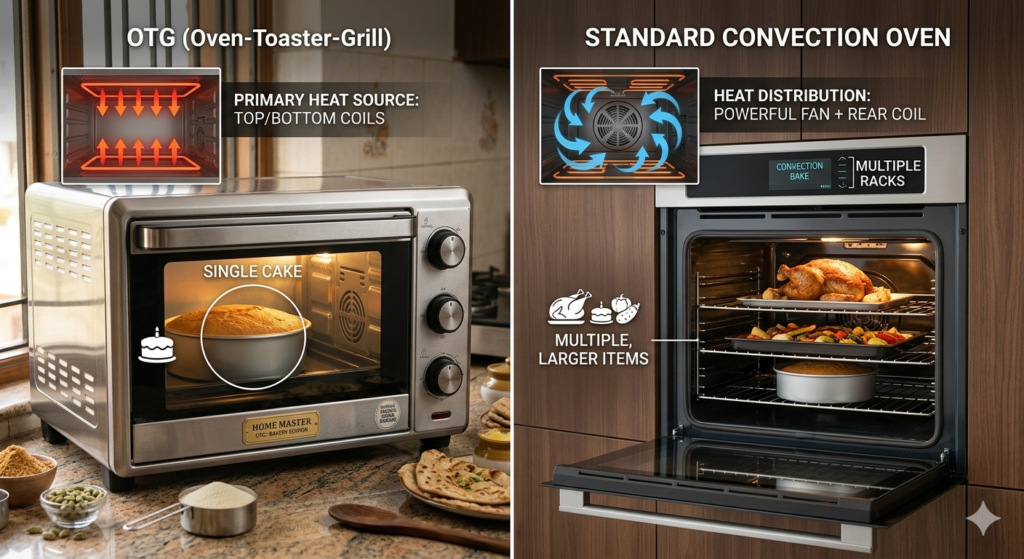
OTG Heating Method
An OTG uses heating rods to generate heat. The heat rises naturally within the chamber, allowing food to bake gradually.
Convection Oven Heating Method
A convection oven uses a fan to circulate hot air. This results in faster and more uniform cooking.
Which Method Is Better?
For baking cakes and pastries, many experienced bakers prefer the traditional heating style of an OTG because it allows better control and produces excellent texture.
OTG vs Oven: Feature Comparison
1. Baking Performance
One of the biggest factors in the OTG vs Oven for Home Bakers debate is baking performance. Home bakers often choose OTGs because they deliver excellent results for cakes, brownies, cookies, and pastries. Baking performance is the most important factor for home bakers.
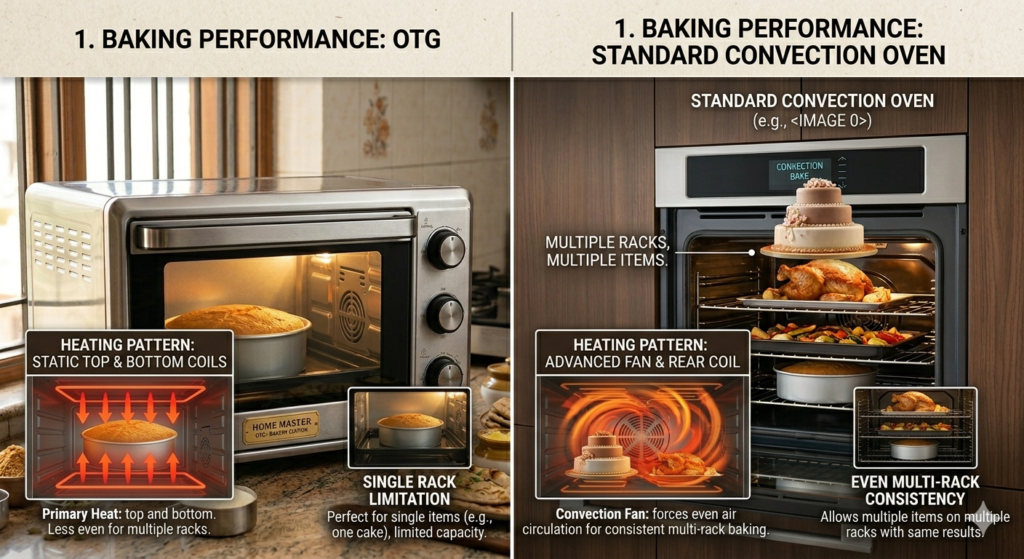
OTG Performance
OTGs excel at:
- Cakes
- Cookies
- Brownies
- Cupcakes
- Breads
- Pizza
The direct heating elements help create excellent structure and texture.
Oven Performance
Convection ovens also bake well, but some models may require adjustments to baking temperature and time.
Winner: OTG
For dedicated baking, OTGs often deliver more consistent results.
2. Temperature Control
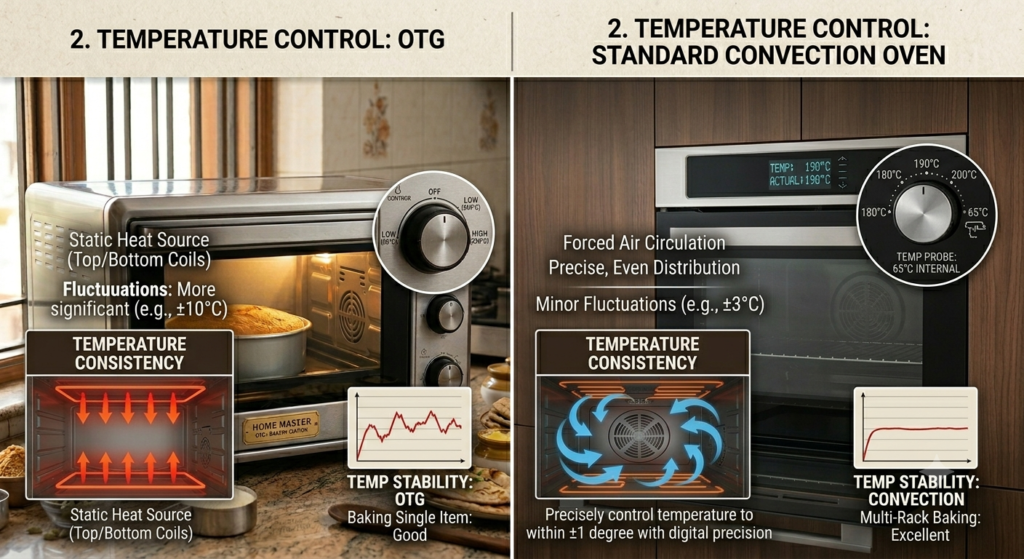
When comparing OTG vs Oven for Home Bakers, one of the most important factors to consider is temperature control. Baking is a science, and even a small variation in temperature can affect the final result. Cakes may sink, cookies can spread too much, and breads may not rise properly if the temperature is inconsistent.
An OTG generally offers better heat distribution through dedicated heating rods, making it easier to maintain the desired baking temperature. This level of precision is especially important for delicate recipes such as sponge cakes, macarons, and pastries. Many home bakers prefer an OTG because it allows them to monitor and adjust temperatures more accurately.
In the OTG vs Oven for Home Bakers debate, consistent temperature control often gives the OTG an advantage for serious baking enthusiasts. Accurate heating helps achieve evenly baked products with better texture, color, and taste, making every baking session more successful and predictable.
OTG
Most OTGs allow independent control of top and bottom heating elements.
Oven
Convection ovens typically use preset programs and automatic settings.
Winner: OTG
Greater control helps bakers achieve professional-quality results.
3. Cake Baking Results
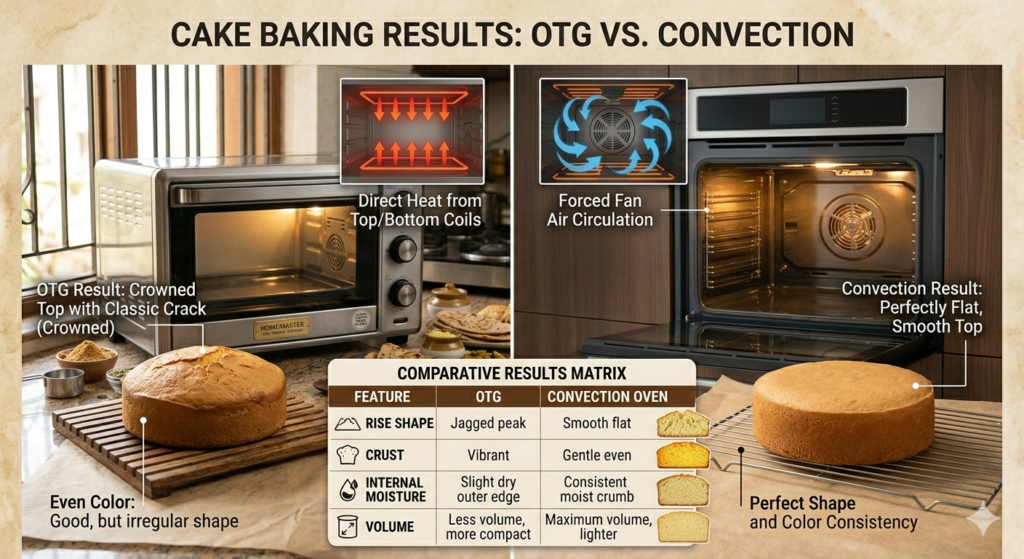
In the discussion of OTG vs Oven for Home Bakers, cake baking is often the deciding factor. OTGs generally provide more predictable cake texture, even baking, and better browning. Every baker wants soft, moist, and evenly baked cakes.
OTG Cakes
OTGs produce:
- Even rise
- Better browning
- Consistent crumb texture
- Professional appearance
Oven Cakes
Convection ovens can bake excellent cakes but may require practice and adjustments.
Winner: OTG
Most professional home bakers prefer OTGs for cakes.
Learn more about cake baking science from:
4. Cookie Baking Results
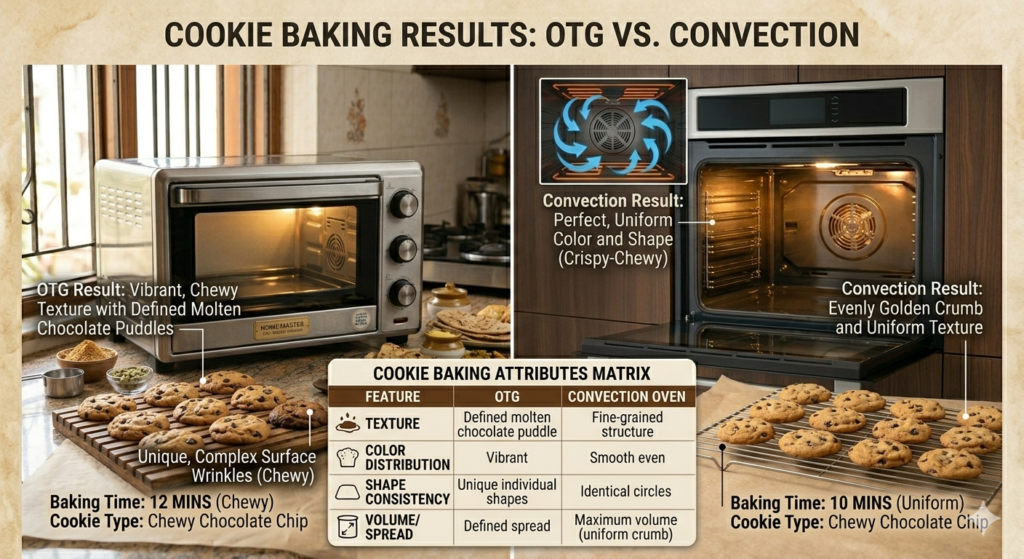
When discussing OTG vs Oven for Home Bakers, heat distribution becomes especially important for baking cookies. Cookies are highly sensitive to temperature variations, and uneven heating can lead to inconsistent results. Some cookies may become overbrowned on the edges while remaining undercooked in the center. Others may spread too much or lose their desired texture.
In the OTG vs Oven for Home Bakers comparison, OTGs are often preferred because they provide direct and consistent heat through top and bottom heating elements. This helps cookies bake evenly across the tray, producing a uniform color, crisp edges, and soft centers when required. Home bakers who frequently prepare chocolate chip cookies, butter cookies, or shortbread often appreciate the reliable baking performance offered by an OTG.
Another reason heat distribution matters in the OTG vs Oven for Home Bakers debate is batch consistency. Whether you’re baking for family gatherings or running a small home baking business, every batch should look and taste the same. Uneven temperatures can cause some cookies to bake faster than others, resulting in wasted ingredients and inconsistent quality.
For home bakers aiming to achieve bakery-style cookies, proper heat circulation and temperature stability are essential. This is why many baking enthusiasts consider heat distribution a key factor when evaluating OTG vs Oven for Home Bakers, especially when cookies are a regular part of their baking routine. Consistent heating not only improves appearance but also enhances flavor, texture, and overall baking success.
OTG Cookies
- Even baking
- Crisp edges
- Soft centers
- Consistent browning
Oven Cookies
Can sometimes bake faster than expected.
Winner: OTG
OTGs are often preferred for cookie baking.
5. Bread Baking
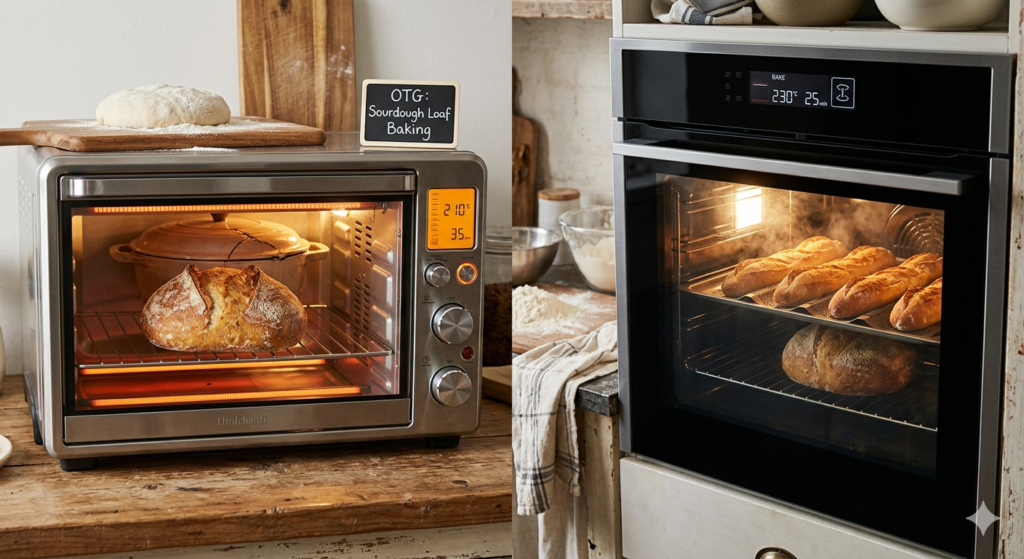
When evaluating OTG vs Oven for Home Bakers, bread baking is one area where stable heat and precise temperature control play a vital role. Bread dough undergoes several important stages during baking, including oven spring, crust formation, and crumb development. Any sudden fluctuation in temperature can negatively affect these processes and lead to disappointing results.
In the OTG vs Oven for Home Bakers comparison, many bakers appreciate the consistent heating provided by an OTG. Stable temperatures help the dough rise properly during the initial baking phase, creating a light and airy texture. At the same time, controlled heat ensures the crust develops evenly without becoming too hard or overly browned.
Whether you’re baking sandwich bread, artisan loaves, dinner rolls, or whole wheat bread, maintaining the correct temperature throughout the baking process is essential. Uneven heating can cause bread to bake unevenly, resulting in a dense center or an overcooked crust. This is why temperature consistency is often a major consideration in the OTG vs Oven for Home Bakers discussion.
For home bakers who enjoy making fresh bread regularly, reliable heat distribution can make a noticeable difference in the final product. A well-controlled baking environment helps achieve better volume, texture, crust color, and flavor. As a result, many baking enthusiasts view stable heat performance as one of the most important factors when choosing between OTG vs Oven for Home Bakers.
OTG
Works very well for:
- Dinner rolls
- Garlic bread
- Sandwich bread
- Artisan loaves
Oven
Also performs well, especially with convection technology.
Winner: Tie
Both appliances can bake bread successfully.
Cost Comparison
OOTG Pricing
One of the biggest advantages in the OTG vs Oven for Home Bakers comparison is affordability. OTGs are specifically designed for baking, grilling, and toasting, which makes them a cost-effective choice for home bakers who want reliable baking performance without spending a large amount.
Approximate OTG price ranges:
- 20–30L OTG: Budget-friendly option for beginners and small families.
- 30–40L OTG: Mid-range models with additional features and larger capacity.
- 50–60L OTG: Premium models suitable for frequent baking and small home baking businesses.
For those starting their baking journey, an OTG provides excellent functionality at a reasonable price point.
Oven Pricing
In the OTG vs Oven for Home Bakers debate, convection microwave ovens generally come with a higher price tag. This is because they combine multiple functions such as microwave cooking, reheating, defrosting, grilling, and convection baking in a single appliance. While these extra features add convenience, they also increase the overall cost.
The additional expense may be worthwhile for users seeking an all-in-one kitchen appliance. However, many of these features may not be essential for bakers whose primary focus is creating cakes, cookies, breads, and pastries.
Winner: OTG
When it comes to value for money, the winner in the OTG vs Oven for Home Bakers comparison is often the OTG. It delivers the core features that bakers need—consistent heating, better temperature control, and dedicated baking performance—at a more affordable price.
For hobby bakers, baking enthusiasts, and even those running a small home-based baking business like cakes and cookies, an OTG offers excellent long-term value. The lower initial investment combined with strong baking capabilities makes it a practical and economical choice for anyone serious about baking.
Energy efficiency is an important consideration in the OTG vs Oven for Home Bakers comparison, especially for those who bake regularly. Whether you’re making cakes, cookies, breads, or pastries several times a week, electricity consumption can significantly impact your monthly utility bills.
OTG
An OTG typically consumes a moderate amount of electricity and uses power primarily for its heating elements. Since it is designed specifically for baking, grilling, and toasting, energy is focused on maintaining the required baking temperature. This makes it a practical choice for home bakers who frequently use their appliance for baking-related tasks.
Oven
In the OTG vs Oven for Home Bakers debate, convection microwave ovens may consume more electricity because they offer multiple functions such as microwaving, reheating, defrosting, grilling, and convection baking. While these features provide versatility, they can contribute to higher overall power usage depending on how the appliance is used.
Additionally, larger ovens may require more energy to reach and maintain baking temperatures, particularly during longer baking sessions.
Winner: OTG
For baking-focused users, the OTG is often considered the winner in the OTG vs Oven for Home Bakers comparison when it comes to electricity consumption. Its dedicated baking design and efficient use of heating elements can make it a more economical option for frequent bakers.
If your primary goal is baking cakes, cookies, breads, and other baked goods, an OTG can help reduce energy costs while still delivering excellent baking results. This combination of performance and efficiency makes it a popular choice among home bakers and small baking business owners alike.
Ease of use is an important factor in the OTG vs Oven for Home Bakers comparison, especially for beginners who are just starting their baking journey. While both appliances can produce excellent baked goods, the learning curve and level of user involvement differ significantly.
OTG
An OTG requires users to manually set the temperature, timer, and heating modes. While this may seem challenging at first, it offers several advantages for those who want to develop strong baking skills.
Benefits of Using an OTG
- Better understanding of baking temperatures and timing
- Greater control over the baking process
- Helps build professional-level baking skills
- Encourages experimentation with different recipes
- Improves confidence in handling various baked products
In the OTG vs Oven for Home Bakers debate, many experienced bakers appreciate the hands-on approach of an OTG because it allows them to fine-tune every aspect of baking.
Oven
Convection microwave ovens are designed with convenience in mind. Many models include preset cooking modes, automatic settings, and one-touch functions that simplify operation.
Benefits of Using an Oven
- Beginner-friendly operation
- Quick and convenient cooking experience
- Preset programs reduce guesswork
- Suitable for users who prefer automation
- Multipurpose functionality beyond baking
For those who want a straightforward appliance that requires minimal adjustments, a convection oven can be an attractive option.
Winner: Oven
When considering ease of use in the OTG vs Oven for Home Bakers comparison, the oven takes the lead. Its preset modes and automated features make it more convenient for beginners and busy households.
However, while the oven wins for simplicity, many serious bakers still prefer an OTG because the manual controls help them gain a deeper understanding of baking techniques. The ideal choice depends on whether you value convenience or hands-on baking control.
Space Requirements: OTG vs Oven for Home Bakers
Kitchen space is an important factor to consider when comparing OTG vs Oven for Home Bakers. The available countertop area and overall kitchen layout can influence which appliance is the better fit for your home.
OTG
An OTG is designed specifically for baking, grilling, and toasting. While it delivers excellent baking performance, it typically requires dedicated counter space. Larger OTG models, especially those with capacities of 40 liters and above, can occupy a significant portion of the kitchen countertop.
Benefits of an OTG
- Dedicated appliance for baking enthusiasts
- Available in various sizes to suit different baking needs
- Ideal for frequent baking and home baking businesses
- Provides sufficient space for larger baking trays and cake tins
However, users with limited kitchen space may find it challenging to accommodate a larger OTG alongside other essential appliances.
Oven
In the OTG vs Oven for Home Bakers comparison, a convection microwave oven offers a more compact and versatile solution. Since it combines multiple functions such as microwaving, reheating, grilling, and baking in a single appliance, it helps reduce the need for multiple kitchen gadgets.
Benefits of an Oven
- Saves valuable countertop space
- Replaces several appliances with one unit
- Suitable for compact kitchens and apartments
- Offers convenience for everyday cooking and baking tasks
For households where space is limited, a multifunction appliance can be a practical choice.
Winner: Oven
When evaluating space requirements in the OTG vs Oven for Home Bakers debate, the oven emerges as the winner. Its ability to combine multiple cooking functions into a single appliance makes it a space-saving solution for small kitchens.
If maximizing kitchen space is a priority, a convection microwave oven can be an excellent option. However, for bakers who prioritize baking performance over space efficiency, an OTG may still be worth dedicating extra countertop space to.
Versatility: OTG vs Oven for Home Bakers
Versatility is another important factor in the OTG vs Oven for Home Bakers comparison. While both appliances can handle baking tasks, they differ significantly in the range of functions they offer.
OTG Functions
An OTG is primarily designed for baking and related cooking methods. Its core functions include:
- Baking cakes, cookies, breads, and pastries
- Grilling vegetables, paneer, and meats
- Toasting bread and snacks
- Roasting various dishes
- Preparing baked desserts and savory items
For users whose main focus is baking, an OTG provides all the essential features needed to achieve excellent results.
Oven Functions
In the OTG vs Oven for Home Bakers debate, convection microwave ovens stand out for their multifunctionality. In addition to baking, they can perform several everyday kitchen tasks.
Common Oven Functions
- Baking
- Reheating leftovers
- Defrosting frozen foods
- Cooking a variety of dishes
- Grilling
- Quick meal preparation
This combination of features makes an oven a convenient all-in-one appliance for modern households.
Winner: Oven
When it comes to versatility, the oven takes the lead in the OTG vs Oven for Home Bakers comparison. Its ability to handle baking, cooking, reheating, defrosting, and grilling makes it suitable for a wide range of kitchen needs.
For families looking for a single appliance that can perform multiple cooking functions, a convection microwave oven offers excellent convenience. However, if baking is your primary passion, many home bakers still prefer an OTG because of its specialized design and superior baking-focused performance. The best choice ultimately depends on whether you prioritize versatility or dedicated baking capabilities.
Which Appliance Is Better for Home Bakers?
When deciding between OTG vs Oven for Home Bakers, there is no one-size-fits-all answer. The right choice depends on your baking goals, kitchen requirements, budget, and how you plan to use the appliance. Both options have their strengths, but one may suit your needs better than the other.
Choose an OTG If:
An OTG is often the preferred choice for passionate bakers who want greater control over the baking process and consistently high-quality results.
You should choose an OTG if:
- You love baking cakes, cookies, breads, and pastries regularly.
- You bake frequently and need reliable performance.
- You want professional-quality baking results at home.
- You run a home bakery business and require consistent output.
- You enjoy learning and mastering baking techniques.
- You prefer manual control over temperature and heating settings.
- Baking is your primary reason for purchasing the appliance.
In the OTG vs Oven for Home Bakers comparison, OTGs are generally favored by serious baking enthusiasts because they are specifically designed for baking and offer excellent temperature control.
Choose an Oven If:
A convection microwave oven is ideal for users who want versatility and convenience in a single appliance.
You should choose an oven if:
- You need one appliance that can handle multiple kitchen tasks.
- You frequently reheat leftovers and ready-to-eat meals.
- You often use defrosting functions for frozen foods.
- You have limited kitchen space and prefer a multifunction appliance.
- You prioritize convenience and automated cooking programs.
- You want a beginner-friendly appliance with preset modes.
- Baking is only one of several cooking activities you perform.
Choosing the right OTG size is an important step in the OTG vs Oven for Home Bakers decision-making process. The ideal capacity depends on how often you bake, the quantity of baked goods you prepare, and whether you’re baking for personal use or a business.
20–30 Liter OTG
A 20–30 liter OTG is an excellent entry-level option for those who are new to baking or have limited baking requirements.
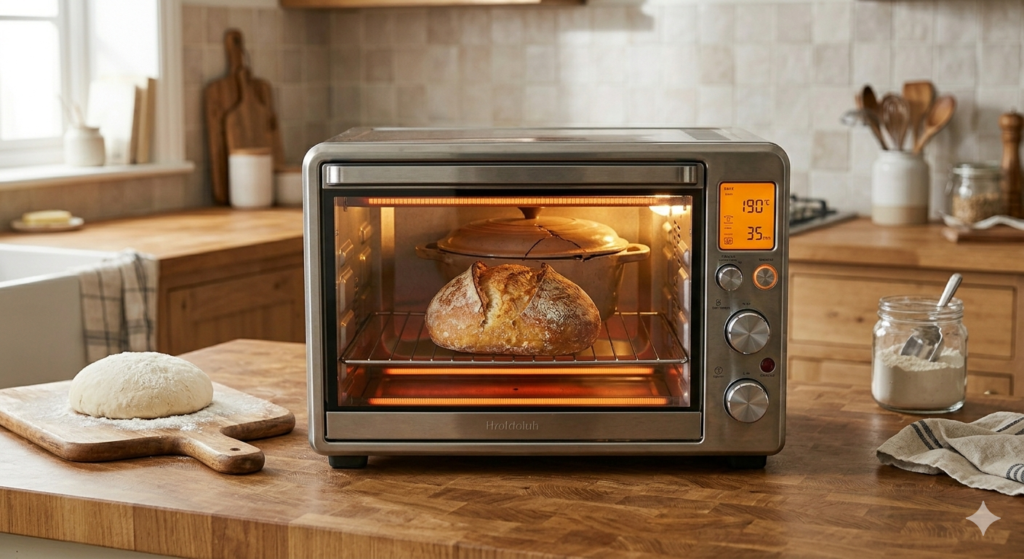
Suitable For:
- Small families
- Occasional baking sessions
- Beginners learning baking techniques
- Simple cakes, cookies, cupcakes, and bread recipes
- Kitchens with limited counter space
This size offers enough capacity for everyday baking needs while remaining affordable and easy to manage.
30–40 Liter OTG
A 30–40 liter OTG is considered the sweet spot in the OTG vs Oven for Home Bakers comparison. It provides a good balance between capacity, functionality, and space requirements.
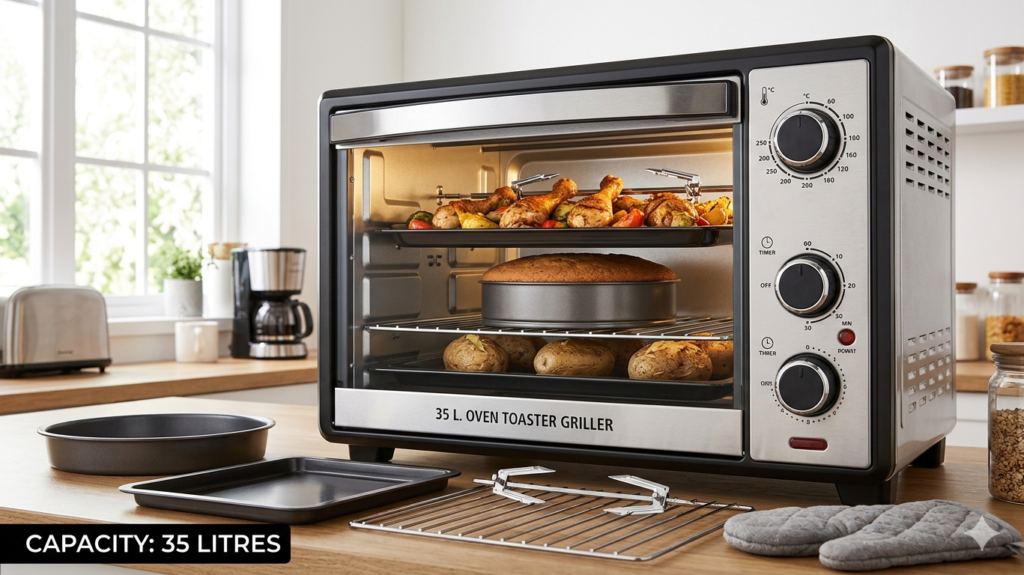
Suitable For:
- Regular home bakers
- Families that bake frequently
- Baking multiple trays of cookies
- Preparing larger cakes and breads
- Users seeking greater flexibility in baking
Many home bakers prefer this size because it accommodates a wider variety of baking projects without taking up excessive kitchen space.
50–60 Liter OTG
A 50–60 liter OTG is designed for serious baking enthusiasts and small-scale baking businesses that require larger baking capacity.
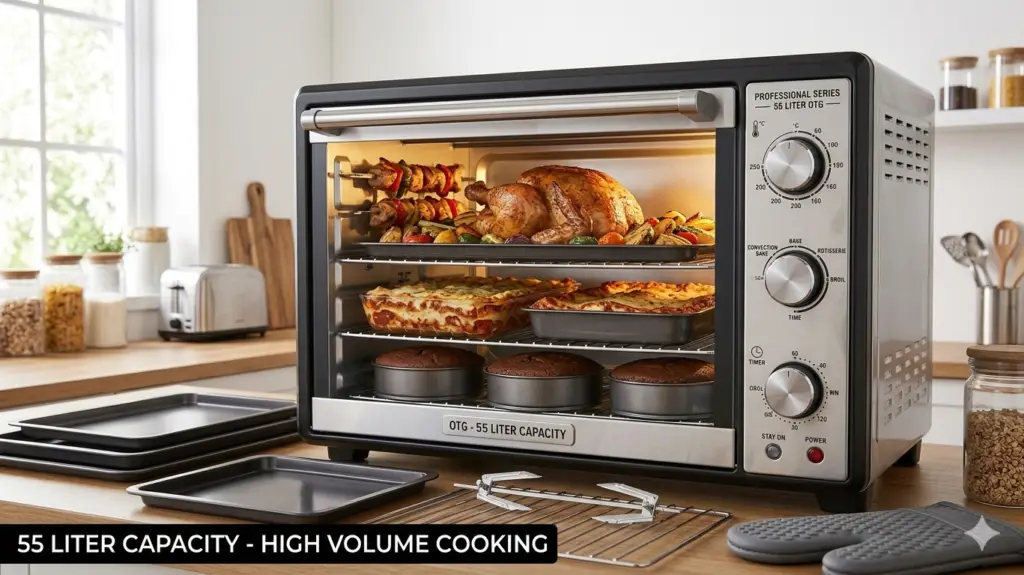
Suitable For:
- Home baking businesses
- Bulk baking orders
- Advanced bakers
- Large celebration cakes
- Baking multiple items simultaneously
- High-volume weekend or festive baking
This size allows bakers to handle larger batches efficiently, making it ideal for entrepreneurs and professionals working from home.
Which Size Should You Choose?
In the OTG vs Oven for Home Bakers discussion, OTG size should be selected based on your current needs and future baking goals.
- 20–30L: Best for beginners and occasional bakers.
- 30–40L: Best for regular home baking and family use.
- 50–60L: Best for home bakery businesses and high-volume baking.
OTG for Home Baking Businesses
For entrepreneurs starting a home bakery, understanding OTG vs Oven for Home Bakers can help reduce startup costs while ensuring high-quality baked products for customers. Many successful home bakers begin their journey with an OTG.
Benefits
- Lower startup cost
- Excellent baking quality
- Consistent results
- Easy to scale
An OTG can handle:
- Birthday cakes
- Cupcakes
- Cookies
- Brownies
- Customized desserts
This makes it an ideal choice for small baking businesses.
Common Mistakes When Buying an OTG
Buying a Small Capacity Model
Many bakers outgrow small OTGs quickly.
Ignoring Temperature Accuracy
Choose a reputable brand with reliable temperature control.
Not Checking Accessories
Useful accessories include:
- Baking tray
- Wire rack
- Crumb tray
- Rotisserie attachment
Choosing Based Only on Price
Investing in quality equipment often saves money long term.
Tips for Baking in an OTG
To get the best results in the OTG vs Oven for Home Bakers comparison, it is essential to learn how to use an OTG effectively. Following a few simple practices can help you achieve evenly baked cakes, perfectly browned cookies, and well-risen breads every time.
Always Preheat the OTG
Preheating is one of the most important steps in baking. Always preheat your OTG for 10–15 minutes before placing the batter or dough inside. A properly preheated OTG ensures that the baking process starts immediately and helps achieve the desired texture, rise, and color.
Use an Oven Thermometer
Not all OTGs display the exact internal temperature. An oven thermometer helps verify the actual temperature inside the appliance, allowing for more accurate baking. This is especially useful when comparing OTG vs Oven for Home Bakers, as precise temperature control is critical for successful baking.
Position Trays Correctly
The placement of your baking tray can significantly affect the outcome. For cakes and most baked goods, place the tray on the center rack. This allows heat to circulate evenly around the pan and helps prevent uneven baking or overbrowning.
Avoid Opening the Door Frequently
One common mistake made by beginners is repeatedly opening the OTG door to check progress. Each time the door is opened, heat escapes and causes temperature fluctuations. This can affect the rise of cakes, the texture of breads, and the consistency of cookies. Try to check only when necessary.
Rotate Trays When Needed
Some OTGs may have slight hot spots that cause one side to bake faster than the other. Rotating trays halfway through the baking process can help promote even browning and consistent results. This tip is particularly useful when baking cookies or multiple trays at the same time.
Additional Tip: Know Your OTG
Every OTG behaves slightly differently. Spend time understanding how your appliance heats, how quickly it reaches temperature, and whether it has hot spots. The more familiar you become with your OTG, the better your baking results will be.
By following these tips, home bakers can maximize the performance of their OTG and enjoy more consistent results. In the OTG vs Oven for Home Bakers debate, mastering these basic techniques can make an OTG a powerful tool for producing bakery-quality cakes, cookies, breads, and pastries right from your home kitchen.
For baking temperatures and oven best practices:
Frequently Asked Questions
Is OTG better than an oven for baking?
For dedicated baking, an OTG is often preferred because it provides better temperature control and baking results.
Can I bake cakes in a convection oven?
Yes. Many convection ovens bake excellent cakes, although some experimentation may be required.
Which is cheaper, OTG or oven?
OTGs are generally more affordable than convection microwave ovens.
Can I start a baking business with an OTG?
Absolutely. Many successful home bakeries begin with a quality OTG.
What size OTG should I buy?
A 40–60 liter OTG is ideal for regular baking and small business use.
Is OTG good for cookies?
Yes. OTGs are excellent for baking cookies, brownies, and cakes.
For additional baking resources and recipes: