Table of Contents
- Introduction to SEO and Digital Marketing Case Studies
- Why SEO and Digital Marketing Case Studies Matter
- Case Study 1: Local Business Increased Organic Traffic by 300%
- The Challenge
- Strategy Implemented
- Results
- Key Takeaway
- Case Study 2: E-commerce Store Doubled Revenue Through SEO
- Product Page Optimization
- Content Marketing Strategy
- Technical SEO Improvements
- Results
- Case Study 3: SaaS Company Generated 500% More Leads
- Content Marketing Approach
- Lead Generation Strategy
- Results
- Case Study 4: Content Marketing Transformed Brand Visibility
- Blog Publishing Strategy
- Social Media Promotion
- Email Marketing Campaigns
- Results
- Case Study 5: Technical SEO Improved Search Rankings
- SEO Audit Findings
- Technical Fixes Implemented
- Results
- Case Study 6: Social Media Advertising Boosted Sales
- Advertising Strategy
- Audience Targeting
- Results
- Case Study 7: Integrated Digital Marketing Delivered Exceptional ROI
- Multi-Channel Marketing Strategy
- Results
- Common Success Factors Across All Case Studies
- Data-Driven Decision Making
- Consistent Content Creation
- User Experience Optimization
- Long-Term Commitment
- Integrated Marketing Channels
- Lessons for Your Business
- Conclusion
- Frequently Asked Questions (FAQs)
SEO and Digital Marketing Case Studies: Learning from Real Success Stories
In today’s competitive digital landscape, businesses must leverage SEO and digital marketing effectively to attract customers, increase visibility, and drive revenue. While understanding marketing theories is important, studying real-world case studies provides valuable insights into what actually works.
These SEO and Digital Marketing Case Studies demonstrate how businesses have successfully increased traffic, generated leads, and improved conversions through strategic online marketing efforts.
This article explores several SEO and digital marketing case studies, highlighting the strategies used, challenges faced, and results achieved. Whether you’re a business owner, marketer, blogger, or entrepreneur, these examples can help you develop successful marketing campaigns for your own business.
Search engines continuously update their algorithms to improve user experience. According to Google Search Central, websites that provide valuable content and a good user experience are more likely to perform well in search results.
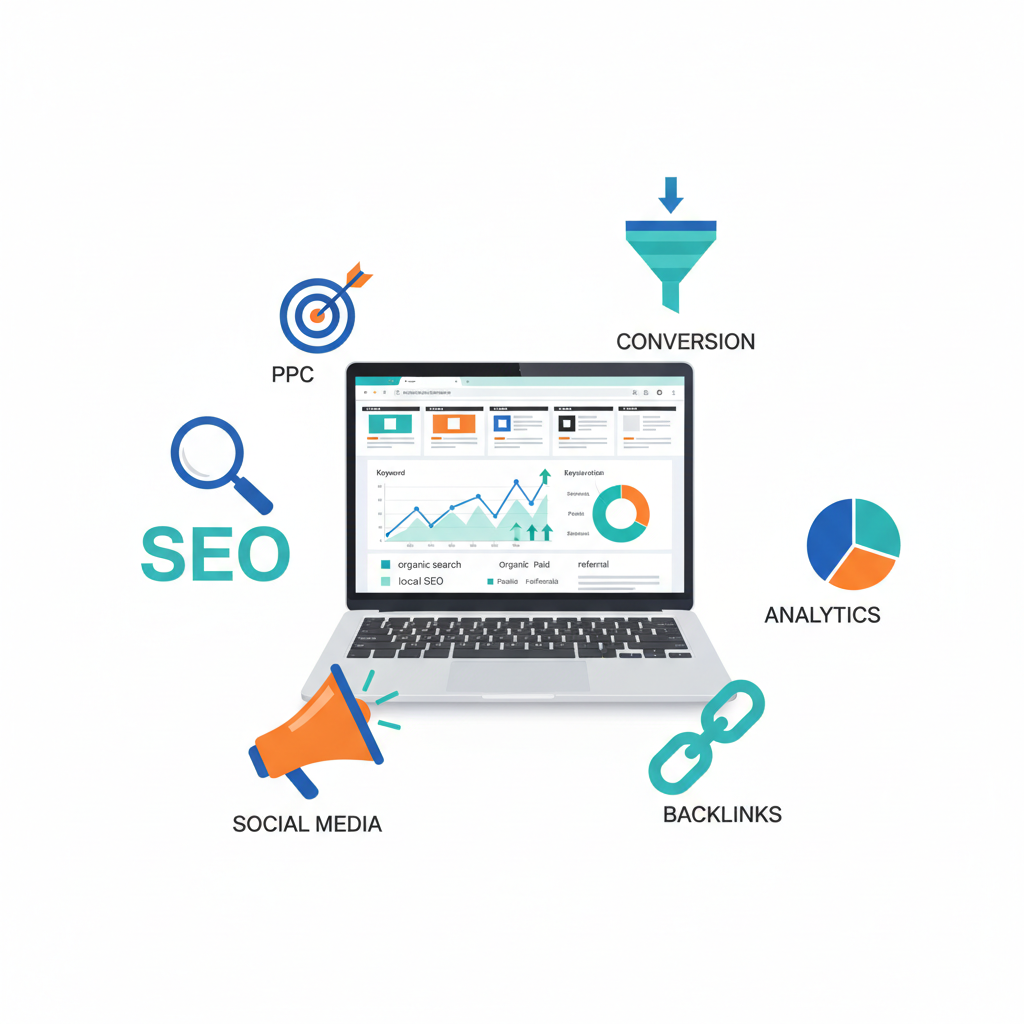
Why SEO and Digital Marketing Case Studies Matter
In the rapidly evolving digital landscape, businesses are constantly searching for effective ways to improve their online visibility, attract more customers, and increase revenue. While learning SEO and digital marketing concepts is important, understanding how these strategies perform in real-world situations is even more valuable. This is where SEO and Digital Marketing Case Studies become essential.
SEO and Digital Marketing Case Studies provide practical examples of how businesses have successfully implemented marketing strategies to achieve measurable results. Rather than focusing solely on theory, case studies demonstrate the actual challenges, solutions, and outcomes experienced by real companies. They offer valuable insights that marketers, business owners, and entrepreneurs can apply to their own campaigns.

One of the biggest advantages of studying SEO and Digital Marketing Case Studies is the opportunity to learn from proven success stories. Businesses can identify strategies that have already delivered positive results, reducing the risk of investing time and resources in ineffective marketing tactics. Case studies also reveal common mistakes and obstacles, helping organizations avoid costly errors.
Another reason SEO and Digital Marketing Case Studies matter is that they provide measurable evidence of what works. Metrics such as organic traffic growth, lead generation, conversion rates, search rankings, and return on investment help demonstrate the effectiveness of various marketing techniques. These real-world results make it easier to understand the impact of SEO and digital marketing efforts.
Case studies also help businesses stay updated with industry trends and best practices. Search engine algorithms, consumer behavior, and digital marketing platforms are constantly changing. By analyzing recent SEO and Digital Marketing Case Studies, marketers can discover emerging strategies, innovative tools, and new opportunities for growth.

Additionally, case studies inspire confidence and strategic thinking. When businesses see how other organizations overcame challenges and achieved success, they gain valuable insights into planning and executing their own campaigns. Whether the goal is improving local search visibility, increasing website traffic, generating leads, or boosting online sales, case studies provide a roadmap for achieving similar outcomes.

Key Benefits of SEO and Digital Marketing Case Studies
- Provide real-world examples of successful marketing strategies
- Demonstrate measurable business results and ROI
- Help businesses avoid common SEO and marketing mistakes
- Offer insights into current industry trends and best practices
- Improve decision-making through data-driven examples
- Inspire new ideas for content marketing and lead generation
- Showcase effective solutions to common business challenges
Ultimately, SEO and Digital Marketing Case Studies bridge the gap between theory and practical application. They allow businesses to learn from real experiences, understand what drives success, and implement proven strategies that support long-term growth. For anyone looking to improve their digital marketing performance, studying case studies is one of the most effective ways to gain actionable knowledge and stay ahead of the competition.
The following SEO and Digital Marketing Case Studies highlight real-world examples of companies that achieved measurable growth through SEO and digital marketing.

Case Study 1: Local Business Increased Organic Traffic by 300%
The Challenge
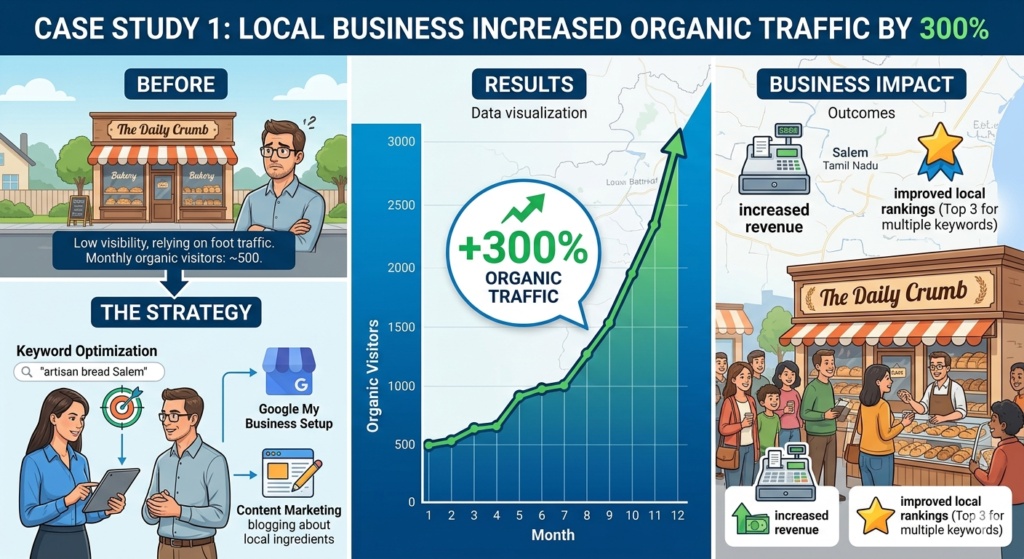
A local bakery struggled to attract customers through online searches. Their website had minimal content, poor keyword optimization, and limited visibility in search results. The business focused heavily on local search visibility. By implementing effective Local SEO Strategies, they improved their rankings and attracted more customers from nearby areas.
Strategy Implemented
After conducting a comprehensive website audit, the marketing team developed a local SEO strategy designed to increase online visibility and attract customers searching for bakery products in their area. The primary goal was to improve local search rankings and convert website visitors into paying customers. This is one of the most practical SEO and Digital Marketing Case Studies because it focuses on strategies that small businesses can implement with limited resources.
Keyword Research for Local Searches
The team began by identifying high-intent local keywords that potential customers were actively searching for. Instead of targeting broad keywords such as “cakes” or “bakery,” they focused on location-based phrases like “best bakery near me,” “birthday cakes in Salem,” and “custom cakes delivery in Salem.” This approach helped attract users who were more likely to make a purchase.
Google Business Profile Optimization
The business optimized its Google Business Profile by updating business information, adding high-quality images, responding to customer reviews, and posting regular updates. Accurate business details such as address, phone number, operating hours, and website links helped improve local search visibility and customer trust.
Creating Location-Specific Landing Pages
To target customers from different areas, the team created dedicated landing pages optimized for specific locations. Each page contained unique content, local keywords, customer testimonials, service information, and clear calls-to-action. These pages helped the business rank for multiple local search queries and attract customers from nearby neighborhoods.
Publishing Weekly Blog Content
Content marketing played a crucial role in the strategy. The business published informative blog articles every week covering topics such as cake decorating tips, celebration ideas, seasonal dessert trends, and baking guides. These articles helped target additional keywords, improve search engine visibility, and establish the business as a trusted authority in the local market.
Improving Website Speed and Mobile Experience
Since most local searches occur on mobile devices, the website was optimized for speed and usability. The team compressed images, improved server response times, implemented caching techniques, and ensured the website functioned smoothly across all devices. Faster loading speeds improved user experience and reduced bounce rates.
Building Local Citations and Backlinks
To strengthen local SEO authority, the business was listed on reputable local directories and industry-specific websites. The team also acquired backlinks from local blogs, news websites, community organizations, and business directories. These citations and backlinks signaled trustworthiness to search engines and contributed to improved rankings.
Results
The local SEO campaign delivered impressive results within six months. The outcomes of this SEO and Digital Marketing Case Study highlight how consistent SEO efforts can deliver substantial long-term business growth.
Organic Traffic Increased by 300%
The website experienced a substantial increase in organic traffic as more pages began ranking for local search terms. Higher visibility in search engine results attracted a larger audience actively looking for bakery products and services.
Website Inquiries Doubled
The improved search presence resulted in significantly more inquiries through contact forms, phone calls, and direct messages. Customers could easily find the business online and contact them for orders and consultations.
Local Keyword Rankings Improved Significantly
Several targeted keywords moved to the first page of search results, with many reaching the top three positions. This increased exposure generated a consistent flow of qualified traffic from local customers.
Online Orders Increased by 180%
The combination of improved rankings, enhanced user experience, and stronger local visibility led to a remarkable increase in online orders. Customers found it easier to browse products, place orders, and engage with the business.
Key Takeaway
This SEO and Digital Marketing Case Study demonstrates the power of local SEO for small and medium-sized businesses. By focusing on location-based keyword research, Google Business Profile optimization, content creation, technical improvements, and local link building, businesses can dramatically improve their online visibility and attract highly qualified local customers.
Local SEO is one of the most cost-effective digital marketing strategies because it targets users who are already searching for products or services nearby. Businesses that invest in local SEO often experience higher traffic, better conversion rates, and sustainable long-term growth compared to relying solely on paid advertising.
Case Study 2: E-commerce Store Doubled Revenue Through SEO
The Challenge
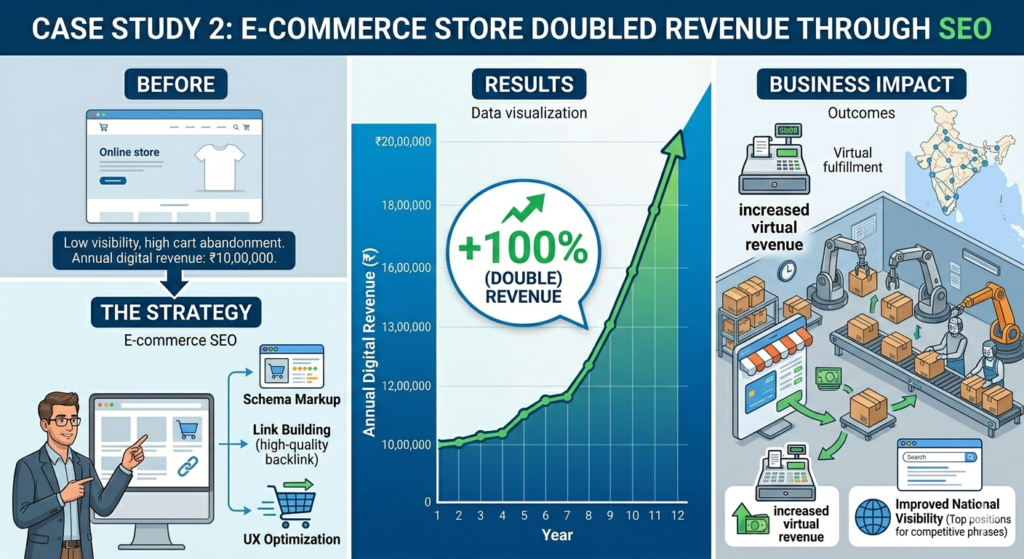
An online fashion retailer depended heavily on paid advertising. Rising advertising costs reduced profitability. Product pages were optimized using techniques covered in our On-Page SEO Checklist, helping search engines better understand the website content.
Strategy Implemented
To reduce its dependence on paid advertising and build a sustainable source of traffic, the SEO team developed a comprehensive optimization strategy focused on content quality, technical performance, and user experience. This SEO and Digital Marketing Case Study demonstrates how a well-executed SEO campaign can transform an e-commerce business.
Product Page Optimization
The first step was optimizing hundreds of product pages across the website. Many pages contained duplicate manufacturer descriptions that provided little value to users or search engines. The team replaced these with unique, keyword-rich product descriptions that highlighted product benefits, features, and use cases.
Additional optimization efforts included:
- Writing compelling title tags and meta descriptions
- Adding relevant target keywords naturally
- Uploading high-quality product images
- Optimizing image alt text for search visibility
- Implementing structured data markup
- Improving product categorization and navigation
Structured data helped search engines better understand product information such as pricing, availability, ratings, and reviews. As a result, product listings became more attractive in search results and achieved higher click-through rates.
Content Marketing Strategy
The company recognized that many customers began their purchasing journey with informational searches rather than direct product searches. To capture this audience, the marketing team launched a content marketing campaign targeting various stages of the buyer’s journey.
Content included:
Fashion Guides
Comprehensive style guides helped users understand current fashion trends, outfit combinations, and seasonal recommendations.
Buying Tips
Educational articles explained how customers could choose the right products based on their needs, preferences, and budget.
Seasonal Trend Articles
The team published content related to seasonal collections, holiday shopping guides, and emerging fashion trends to capture additional search traffic.
FAQ Content
Frequently asked questions were incorporated into category pages and blog articles to address common customer concerns and improve visibility for long-tail keywords.
This content strategy expanded the website’s keyword footprint and attracted highly qualified visitors who were actively researching products before making purchasing decisions.
Technical SEO Improvements
Technical SEO played a critical role in the campaign’s success. During an initial audit, the team discovered several issues that negatively impacted search performance and user experience.
Key improvements included:
Site Speed Optimization
Large image files, unnecessary scripts, and inefficient code were slowing down page load times. These issues were corrected through image compression, browser caching, and code optimization.
Mobile Optimization
Since a significant percentage of visitors were shopping on mobile devices, the website was redesigned to provide a seamless mobile experience. Navigation, product browsing, and checkout processes were simplified for smartphone users.
Fixing Crawl Errors
Broken links, redirect issues, and indexing problems were identified and resolved to help search engines crawl the website more efficiently.
Internal Linking Improvements
The team strengthened internal linking between product pages, category pages, and blog content. This improved website architecture and distributed authority throughout the site.
Results
The SEO campaign produced exceptional results within eight months.
Organic Traffic Increased by 220%
Improved rankings across product pages, category pages, and blog content led to a substantial increase in organic traffic. Thousands of new visitors discovered the website through search engines without the company having to pay for each click.
Revenue Doubled
The increase in qualified traffic translated directly into higher sales. More visitors were finding relevant products and completing purchases, resulting in a significant revenue increase.
Cost Per Acquisition Decreased
As organic traffic grew, the company relied less on paid advertising. This reduced customer acquisition costs and improved overall marketing profitability.
Reduced Dependence on Paid Advertising
Before implementing SEO, the business depended heavily on paid campaigns for traffic and sales. After achieving strong organic rankings, the company generated a consistent flow of visitors without increasing advertising spend.
Improved Brand Visibility
The business became more visible across search results for both informational and transactional keywords. This increased brand recognition and customer trust, further supporting long-term growth.
Key Takeaway
This SEO and Digital Marketing Case Study highlights the importance of building a strong SEO foundation for e-commerce success. By optimizing product pages, creating valuable content, and addressing technical SEO issues, the company achieved sustainable growth while reducing its reliance on paid advertising.
One of the key lessons from successful SEO and Digital Marketing Case Studies is that organic traffic often delivers long-term value. Unlike paid ads that stop generating traffic when budgets are reduced, SEO continues to drive visitors and sales over time.
This example demonstrates that businesses willing to invest in content marketing, technical optimization, and user experience improvements can achieve significant growth while lowering customer acquisition costs. As seen in many successful SEO and Digital Marketing Case Studies, a comprehensive SEO strategy can become one of the most profitable marketing channels for e-commerce businesses.
Case Study 3: SaaS Company Generated 500% More Leads
The Challenge
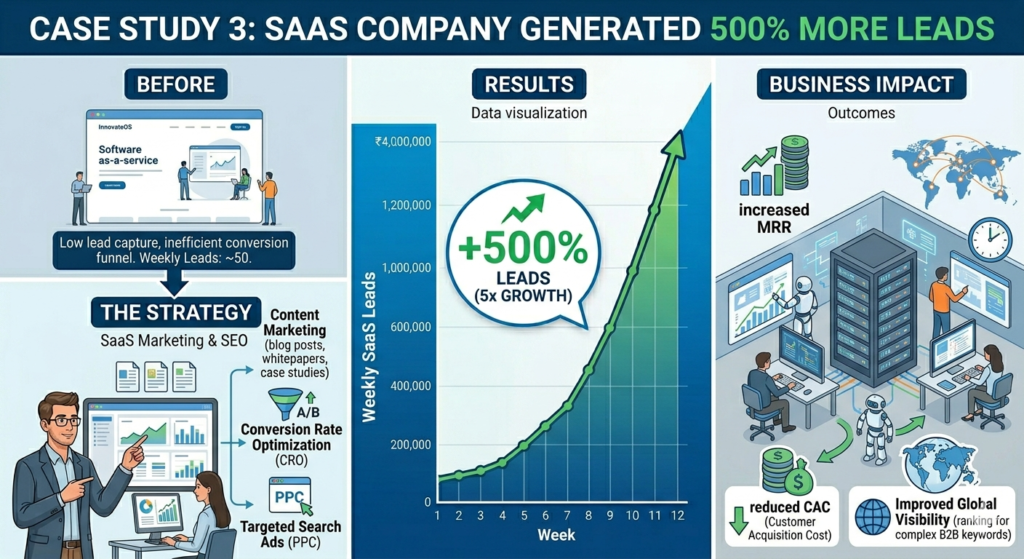
A software company faced intense competition in search results and struggled to generate qualified leads.
Strategy Implemented
Facing intense competition in the software industry, the company realized that simply promoting product features was not enough to attract potential customers. To stand out in search results and establish industry authority, the marketing team developed a comprehensive content marketing and lead generation strategy. This SEO and Digital Marketing Case Study highlights how educational content can become a powerful tool for generating qualified leads and driving business growth.
Long-Form Educational Content
The foundation of the strategy was the creation of in-depth educational content designed to answer common questions and solve industry-specific challenges. Instead of focusing solely on product promotion, the company created valuable resources that addressed customer pain points.
Content topics included:
- Industry best practices
- Step-by-step implementation guides
- Problem-solving tutorials
- Expert insights and recommendations
- Trend analysis articles
These long-form articles were optimized for high-value keywords and structured to provide maximum value to readers. As a result, they attracted organic traffic from users actively searching for solutions.
Industry Research Reports
To establish credibility and thought leadership, the company invested in original research and data-driven reports. These reports provided valuable industry insights that were widely shared by professionals, bloggers, and media publications.
Benefits of publishing research reports included:
- Earning authoritative backlinks
- Increasing brand recognition
- Building trust with potential customers
- Generating media coverage
- Attracting decision-makers and industry leaders
The research content became one of the company’s strongest lead-generation assets.
Comparison Articles
Many potential customers were comparing different software solutions before making a purchasing decision. To capture this audience, the marketing team created detailed comparison articles that objectively analyzed various options available in the market.
Examples included:
- Product A vs Product B
- Best software solutions for small businesses
- Feature comparison guides
- Pricing comparison articles
These comparison pages targeted high-intent keywords and helped users evaluate their options while introducing them to the company’s solution.
Product Tutorials
The company also produced practical tutorials demonstrating how to solve common business problems using its software. These tutorials helped prospects understand the product’s value before committing to a purchase.
Tutorial content included:
- Setup guides
- Feature walkthroughs
- Workflow optimization tips
- Video demonstrations
- Use-case examples
By educating users, the company reduced uncertainty and increased confidence in its product.
Video Marketing Campaigns
To expand its reach and engage different audience segments, the company invested in video marketing. Educational videos, webinars, product demonstrations, and customer success stories were published across multiple platforms.
Video content helped:
- Increase engagement
- Improve brand awareness
- Build trust with potential customers
- Drive traffic to landing pages
- Support lead-generation efforts
The combination of written and video content allowed the company to reach users with different content preferences.
Conversion Optimization Strategy
Generating traffic alone was not enough. The company also focused on converting visitors into qualified leads.
Landing Page Optimization
Dedicated landing pages were created for different customer segments and marketing campaigns. Each page featured:
- Clear value propositions
- Strong calls-to-action
- Customer testimonials
- Product benefits
- Lead capture forms
A/B testing was conducted regularly to improve performance and maximize conversions.
Lead Magnets
The company offered valuable downloadable resources in exchange for contact information.
Popular lead magnets included:
- Industry reports
- E-books
- Templates
- Checklists
- Webinars
These resources attracted highly interested prospects and helped grow the company’s email list.
Conversion Funnel Improvements
The marketing team carefully analyzed the customer journey and optimized every stage of the conversion funnel. Barriers to conversion were removed, and users were guided smoothly from awareness to consideration and decision-making.
Email Nurturing Sequences
Automated email campaigns were developed to educate prospects and build relationships over time. These email sequences delivered relevant content based on user interests and behavior.
The nurturing process helped:
- Increase engagement
- Build trust
- Address customer concerns
- Encourage product trials
- Improve sales conversions
Results
The comprehensive content and conversion strategy produced outstanding results within twelve months.
Organic Traffic Increased by 400%
The company’s educational content ranked for hundreds of industry-related keywords, significantly increasing organic search visibility. Thousands of new visitors discovered the website through search engines every month.
Lead Generation Improved by 500%
The combination of valuable content, optimized landing pages, and lead magnets dramatically increased the number of qualified leads entering the sales pipeline.
Conversion Rates Increased by 35%
Visitors arriving through educational content were highly engaged and more likely to convert. Improvements to landing pages and email nurturing sequences further increased conversion rates.
Customer Acquisition Costs Decreased
As organic traffic and lead generation increased, the company relied less on expensive paid advertising channels. This significantly reduced customer acquisition costs and improved marketing efficiency.
Enhanced Industry Authority
The company became recognized as a trusted source of information within its industry. This authority strengthened its brand reputation and created additional growth opportunities.
Key Takeaway
This SEO and Digital Marketing Case Study demonstrates the powerful impact of educational content marketing. By focusing on helping customers solve problems rather than aggressively promoting products, the company established authority, built trust, and generated highly qualified leads.
One of the most valuable lessons from successful SEO and Digital Marketing Case Studies is that content can serve as both a traffic-generation and lead-generation asset. High-quality educational resources attract users at different stages of the buying journey and guide them toward becoming customers.
As shown in this SEO and Digital Marketing Case Study, businesses that invest in long-form content, research reports, tutorials, and conversion optimization can achieve sustainable growth while reducing customer acquisition costs. Educational content not only improves search engine visibility but also positions a brand as a trusted industry leader capable of attracting and converting qualified prospects.
Case Study 4: Content Marketing Transformed Brand Visibility
The Challenge
A startup struggled with brand awareness despite offering a unique product.
Strategy Implemented
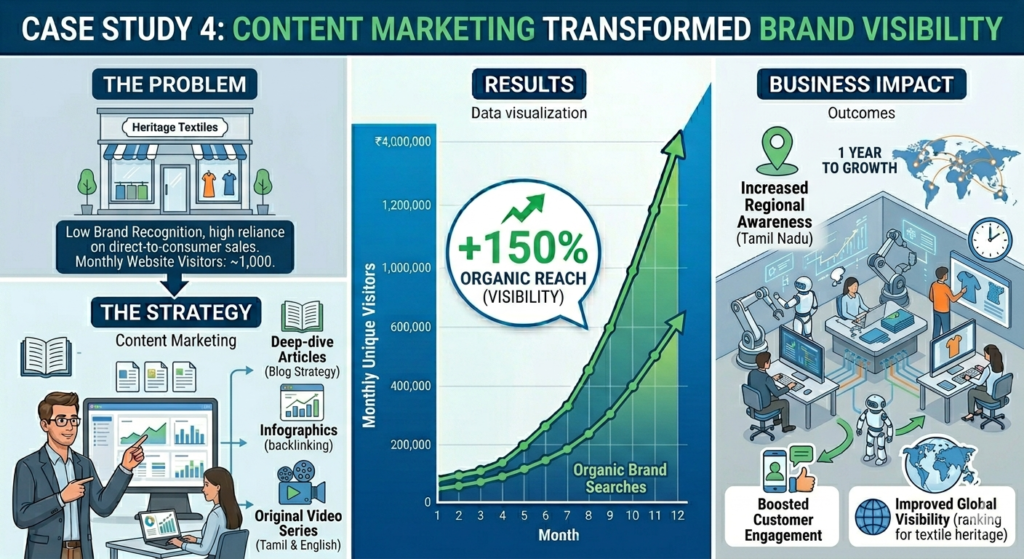
To overcome low brand awareness and limited online visibility, the company developed a comprehensive content marketing strategy focused on educating, engaging, and building trust with its target audience. Rather than relying solely on advertisements, the business invested in creating valuable content that would attract potential customers organically. This SEO and Digital Marketing Case Study demonstrates how consistent content marketing can significantly improve brand recognition and audience engagement.
Blog Publishing Strategy
The foundation of the campaign was a well-planned blog publishing schedule. The company committed to publishing high-quality content every week to provide valuable information and answer common customer questions.
Weekly Articles
Regular blog posts helped keep the website fresh and active while targeting a wide range of relevant keywords. Each article was optimized for search engines and designed to address specific customer pain points.
Industry Insights
The company published expert commentary on industry developments, helping readers stay informed about important trends and changes. These insights positioned the brand as a knowledgeable and reliable source of information.
Expert Interviews
Collaborating with industry experts added credibility to the content strategy. Interviews provided unique perspectives, attracted new audiences, and increased trust among readers.
Trend Analysis
The marketing team regularly published trend-focused content that explored emerging opportunities and market developments. This helped the business stay relevant while attracting traffic from users searching for the latest information.
Over time, the blog became a valuable resource that consistently generated organic traffic and encouraged repeat visits.
Social Media Promotion
Creating great content was only part of the strategy. The company also invested heavily in social media marketing to maximize content distribution and audience engagement.
LinkedIn Marketing
LinkedIn was used to share industry insights, thought leadership articles, and company updates. This helped the business connect with professionals, decision-makers, and potential customers.
Facebook Engagement
The company actively engaged with its audience through comments, discussions, live sessions, and content sharing. This increased brand visibility and fostered stronger relationships with followers.
Instagram Campaigns
Visual content such as graphics, short videos, behind-the-scenes content, and customer success stories helped increase engagement on Instagram. Consistent posting and audience interaction improved reach and brand awareness.
Community Building
Rather than focusing only on promotions, the company invested time in building an online community. Discussions, polls, user-generated content, and audience feedback created meaningful interactions that strengthened customer loyalty.
The social media strategy ensured that every piece of content reached a wider audience and generated ongoing engagement.
Email Marketing Campaigns
Email marketing played a critical role in nurturing relationships with existing subscribers and converting interested prospects into loyal customers.
Monthly Newsletters
Subscribers received regular newsletters featuring company updates, industry news, educational resources, and featured blog content. These newsletters helped maintain consistent communication with the audience.
Personalized Campaigns
The marketing team segmented subscribers based on interests and behavior, allowing them to send highly relevant and personalized content. This improved open rates, click-through rates, and overall engagement.
Educational Email Sequences
Automated email sequences were created to educate new subscribers about industry topics and available solutions. These campaigns gradually built trust while guiding prospects through the customer journey.
The combination of valuable content and personalized communication strengthened relationships with subscribers and encouraged long-term engagement.
Results
The content marketing campaign delivered remarkable results within nine months.
Website Traffic Increased by 250%
Consistent blog publishing and content promotion significantly improved organic search visibility. The website attracted a growing number of visitors who were actively searching for information related to the company’s industry.
Social Media Followers Grew by 400%
The social media strategy successfully expanded the company’s online presence. Increased engagement, valuable content, and community interaction contributed to rapid follower growth across multiple platforms.
Email Subscriber List Tripled
Lead-generation initiatives and content offers encouraged more visitors to subscribe to the company’s email list. The growing subscriber base provided a valuable channel for ongoing communication and marketing.
Brand Mentions Increased Substantially
As content gained traction and audience engagement improved, the company experienced a significant increase in brand mentions across social media, blogs, forums, and industry discussions. This strengthened brand recognition and credibility.
Improved Customer Trust and Authority
The consistent publication of educational content positioned the company as a trusted industry resource. Customers increasingly viewed the brand as an expert, making them more likely to engage with its products and services.
Key Takeaway
This SEO and Digital Marketing Case Study highlights the importance of content marketing as a long-term strategy for building brand visibility and customer trust. By consistently publishing valuable content, promoting it through social media, and nurturing relationships through email marketing, the company created a sustainable system for attracting and engaging potential customers.
One of the key lessons from successful SEO and Digital Marketing Case Studies is that content marketing delivers benefits beyond traffic generation. It helps establish authority, build relationships, increase brand awareness, and create lasting customer loyalty.
As demonstrated in this SEO and Digital Marketing Case Study, businesses that invest in consistent content creation and audience engagement often experience significant improvements in visibility, credibility, and overall marketing performance. Over time, these efforts can generate compounding results that contribute to long-term business growth and competitive advantage.
Case Study 5: Technical SEO Improved Search Rankings
The Challenge
A large website experienced declining ranking despite publishing quality content. The company conducted a full website audit and followed recommendations from a comprehensive Technical SEO Guide to fix indexing and performance issues.
Website performance has become a major ranking factor. Businesses can use tools such as PageSpeed Insights to analyze loading speed and identify opportunities to improve Core Web Vitals.
SEO Audit Findings
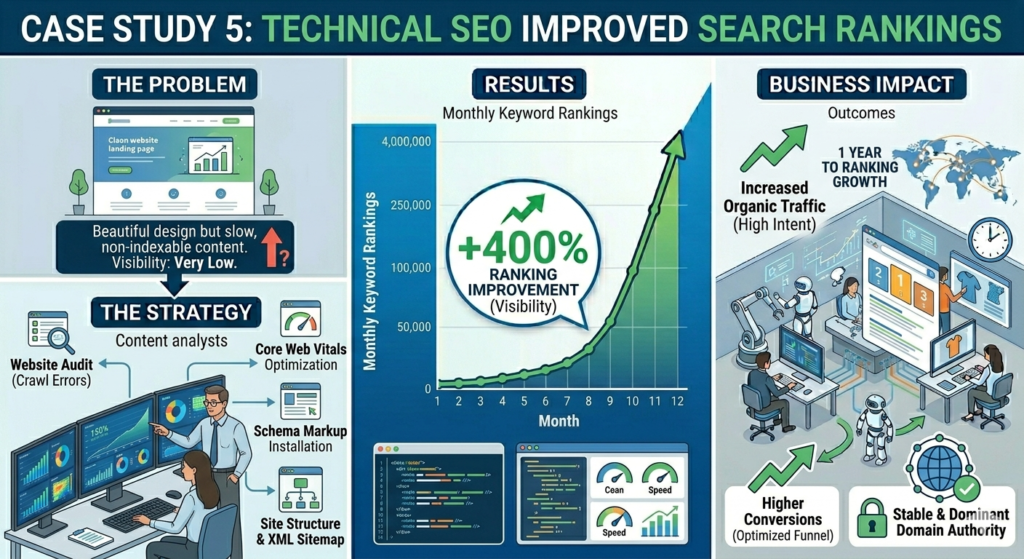
During a comprehensive website audit, the SEO team discovered several technical issues that were negatively affecting search engine rankings, user experience, and overall website performance. Although the website contained valuable content, these technical problems prevented search engines from effectively crawling, indexing, and ranking its pages. This SEO and Digital Marketing Case Study demonstrates how addressing technical SEO issues can significantly improve website visibility and organic traffic.
Slow Loading Speeds
One of the biggest challenges identified was poor page loading speed. Large image files, excessive JavaScript, unoptimized code, and inefficient server configurations caused pages to load slowly. This negatively impacted both user experience and search engine rankings.
Research consistently shows that users are more likely to abandon websites that take too long to load. Slow-loading pages can increase bounce rates, reduce engagement, and lower conversion rates. Search engines also consider page speed as an important ranking factor.
Duplicate Content Issues
The audit revealed multiple instances of duplicate content across category pages, product pages, and archived content. Duplicate content can confuse search engines, making it difficult to determine which version of a page should appear in search results.
As a result, valuable ranking signals were being diluted across multiple URLs, reducing the website’s overall search visibility.
Broken Links
Numerous broken internal and external links were discovered throughout the website. Broken links create a poor user experience and make it difficult for search engine crawlers to navigate the site efficiently.
Users encountering error pages often leave the website immediately, while search engines may interpret excessive broken links as a sign of poor website maintenance.
Poor Site Architecture
The website’s structure lacked a logical hierarchy, making navigation difficult for both users and search engines. Important pages were buried deep within the site, requiring multiple clicks to access.
Poor site architecture can reduce crawl efficiency and prevent valuable pages from receiving sufficient authority through internal linking.
Indexing Problems
The audit also uncovered several indexing issues. Some important pages were not being indexed, while others that provided little value were appearing in search engine indexes. Incorrect robots.txt directives, missing sitemap updates, and crawl inefficiencies contributed to these problems.
Without proper indexing, even high-quality content may fail to appear in search results.
Actions Taken
After identifying the technical issues, the SEO team implemented a structured optimization plan designed to improve website performance and search visibility.
Improved Core Web Vitals
The team focused on optimizing Google’s Core Web Vitals metrics, which measure user experience factors such as loading performance, visual stability, and interactivity.
Key improvements included:
- Compressing large images
- Implementing browser caching
- Reducing unnecessary code
- Optimizing server response times
- Minimizing JavaScript and CSS files
These enhancements significantly improved website speed and overall user experience.
Fixed Duplicate Content
To resolve duplicate content issues, the SEO team:
- Implemented canonical tags
- Consolidated duplicate pages
- Updated URL structures
- Improved content uniqueness
- Managed pagination correctly
These actions helped search engines better understand which pages should be prioritized in search results.
Updated XML Sitemaps
The XML sitemap was reviewed and updated to ensure that all important pages were included while low-value pages were excluded.
An optimized sitemap helped search engines discover, crawl, and index content more efficiently.
Resolved Crawl Errors
The team used SEO auditing tools to identify and fix crawl-related issues, including:
- Broken links
- Redirect chains
- Server errors
- Missing pages
- Incorrect redirects
Reducing crawl errors improved the website’s overall health and search engine accessibility.
Enhanced Internal Linking
A strategic internal linking structure was implemented to improve navigation and distribute authority throughout the website.
Benefits included:
- Better crawlability
- Improved user navigation
- Increased page authority distribution
- Enhanced topic relevance
- Higher engagement metrics
Internal links also helped guide visitors toward valuable content and conversion-focused pages.
Results
The technical SEO improvements delivered significant results within just four months.
Page Speed Improved by 60%
Website performance improved dramatically following speed optimization efforts. Faster loading times enhanced user experience and reduced bounce rates.
Indexed Pages Increased
Search engines were able to crawl and index more important pages, increasing the website’s overall visibility in search results.
Organic Traffic Grew by 150%
As technical barriers were removed, search rankings improved across numerous keywords. This resulted in a substantial increase in organic traffic from highly relevant search queries.
Keyword Rankings Improved Across Multiple Categories
Many target keywords moved closer to the top of search engine results pages. Improved crawlability, indexing, and page performance contributed to stronger rankings across various content categories.
Improved User Experience
Visitors benefited from faster page loads, easier navigation, and a more seamless browsing experience. These improvements increased engagement and contributed to better conversion rates.
Key Takeaway
This SEO and Digital Marketing Case Study demonstrates that technical SEO is the foundation of a successful digital marketing strategy. Even the best content can struggle to perform if search engines cannot efficiently crawl, index, and understand a website.
One of the most important lessons from successful SEO and Digital Marketing Case Studies is that technical optimization should never be overlooked. Improving website speed, resolving crawl errors, fixing duplicate content, and strengthening site architecture can produce significant gains in visibility and traffic.
As shown in this SEO and Digital Marketing Case Study, businesses that invest in technical SEO often experience faster indexing, better rankings, increased organic traffic, and improved user satisfaction. Technical SEO creates a strong foundation that supports all other marketing efforts and enables long-term search engine success.
Case Study 6: Social Media Advertising Boosted Sales
The Challenge
A new online business needed immediate traffic and sales.
Marketing Strategy
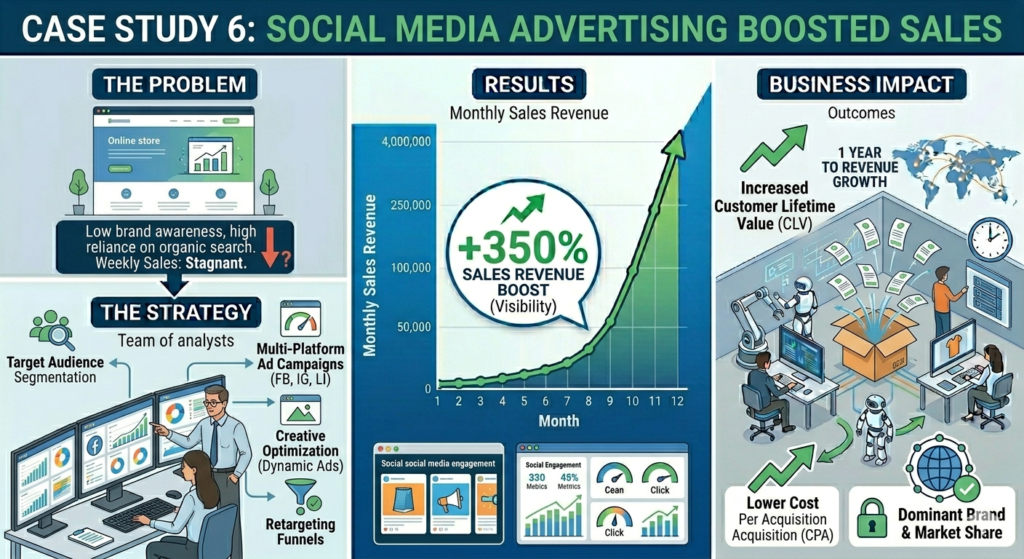
To generate immediate visibility, attract new customers, and increase online sales, the company implemented a comprehensive paid social media marketing strategy. Unlike SEO, which often takes time to produce results, paid advertising offered the opportunity to reach highly targeted audiences quickly. This SEO and Digital Marketing Case Study demonstrates how social media advertising can accelerate business growth when combined with precise audience targeting and compelling creative content.
The marketing team focused on multiple advertising channels to maximize reach and conversions while maintaining a cost-effective customer acquisition strategy.
Facebook Ad Campaigns
Facebook became one of the primary advertising platforms due to its advanced targeting capabilities and massive user base. The company launched several campaign types designed to reach customers at different stages of the buying journey.
Campaign objectives included:
- Brand awareness
- Website traffic
- Lead generation
- Product sales
- Customer engagement
The team created visually appealing advertisements featuring high-quality images, promotional offers, customer testimonials, and strong calls-to-action. Continuous testing helped identify the best-performing ad creatives and messaging.
Instagram Promotions
Since the target audience was highly active on Instagram, the company invested heavily in visual storytelling and promotional campaigns. Instagram allowed the business to showcase products through engaging photos, reels, stories, and carousel posts.
The Instagram strategy focused on:
- Product showcases
- Behind-the-scenes content
- Customer success stories
- Promotional offers
- User-generated content
These campaigns helped increase engagement while driving qualified traffic to the website.
Retargeting Advertisements
One of the most effective components of the campaign was retargeting. Many users visited the website but left without completing a purchase. Retargeting ads allowed the company to reconnect with these visitors and encourage them to return.
Retargeting campaigns targeted:
- Website visitors
- Product page viewers
- Cart abandoners
- Previous customers
- Email subscribers
By displaying relevant ads to users who had already shown interest, the company significantly improved conversion rates and reduced wasted advertising spend.
Influencer Partnerships
To expand reach and build credibility, the company collaborated with industry influencers and content creators. Influencers promoted products to their engaged audiences through reviews, demonstrations, testimonials, and sponsored content.
Benefits of influencer marketing included:
- Increased brand trust
- Expanded audience reach
- Higher engagement rates
- Social proof
- Improved brand awareness
These partnerships helped introduce the brand to new customer segments that may not have been reached through traditional advertising alone.
Audience Targeting Strategy
The success of the campaign was largely driven by precise audience targeting. Instead of showing advertisements to broad audiences, the company focused on users who were most likely to engage and convert.
Interest-Based Segmentation
The marketing team identified audience interests closely related to the company’s products and services. Users were grouped based on their behaviors, hobbies, preferences, and purchasing patterns.
This approach ensured that advertisements were shown to highly relevant audiences, improving engagement and conversion rates.
Lookalike Audiences
Using customer data, the company created lookalike audiences consisting of users who shared similar characteristics with existing customers. This allowed the business to reach new prospects who were more likely to be interested in its offerings.
Lookalike audiences often delivered some of the highest-performing advertising results because they closely matched the profiles of proven buyers.
Website Visitors
Custom audiences were created based on website activity. Users who had previously visited the website were shown tailored advertisements based on the pages they viewed and actions they took.
This personalization increased ad relevance and improved campaign effectiveness.
Cart Abandoners
Special campaigns targeted users who added products to their shopping carts but failed to complete the purchase process. These advertisements often included limited-time offers, reminders, or incentives to encourage customers to finalize their orders.
Cart abandonment campaigns helped recover lost sales and improve overall revenue.
Results
The paid social media campaign produced impressive results within just three months.
Website Traffic Increased by 350%
The combination of Facebook advertising, Instagram promotions, and influencer collaborations generated a significant increase in website visitors. More users discovered the brand and explored its products and services.
Sales Increased by 270%
Highly targeted advertising campaigns attracted qualified prospects who were ready to purchase. As a result, sales increased dramatically during the campaign period.
Return on Ad Spend Improved Significantly
Continuous optimization, audience refinement, and creative testing helped improve advertising efficiency. The company generated more revenue for every dollar spent on advertising, resulting in a stronger return on investment.
Brand Awareness Expanded Rapidly
The campaigns dramatically increased brand visibility across social media platforms. More users became familiar with the company, its products, and its value proposition, creating opportunities for future customer acquisition.
Improved Customer Engagement
Likes, comments, shares, and direct interactions increased substantially. This engagement strengthened customer relationships and contributed to long-term brand loyalty.
Key Takeaway
This SEO and Digital Marketing Case Study highlights the power of paid social media advertising as a growth accelerator. While organic marketing strategies such as SEO provide long-term benefits, paid advertising can generate immediate traffic, leads, and sales when executed effectively.
One of the most important lessons from successful SEO and Digital Marketing Case Studies is that audience targeting often determines campaign success. By focusing on interest-based segmentation, lookalike audiences, website visitors, and cart abandoners, businesses can maximize advertising performance while controlling costs.
As demonstrated in this SEO and Digital Marketing Case Study, combining Facebook ads, Instagram promotions, retargeting campaigns, and influencer partnerships can significantly increase traffic, sales, and brand awareness. When integrated with broader digital marketing efforts, paid social advertising becomes a powerful tool for driving sustainable business growth.
Case Study 7: Integrated Digital Marketing Delivered Exceptional ROI
The Challenge
A growing business wanted to scale revenue while maintaining profitability.
Multi-Channel Strategy
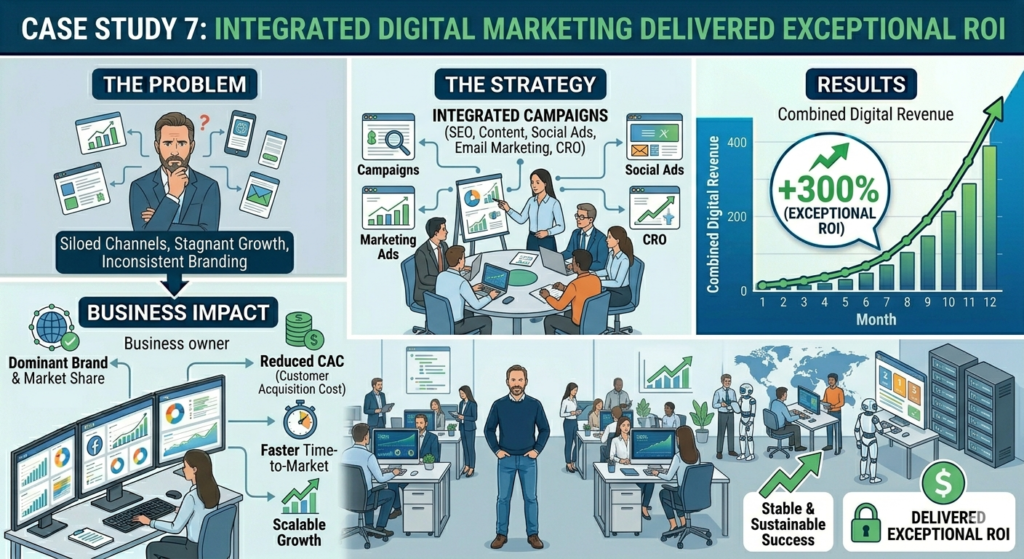
To accelerate growth and maximize marketing performance, the company adopted an integrated digital marketing strategy that combined multiple channels working together toward common business objectives. Instead of relying solely on one source of traffic, the marketing team developed a coordinated approach that leveraged SEO, paid advertising, email marketing, and social media. This SEO and Digital Marketing Case Study demonstrates how a multi-channel strategy can create sustainable growth and deliver exceptional return on investment.
The primary goal was to create multiple customer touchpoints throughout the buyer’s journey, ensuring that potential customers could discover, engage with, and purchase from the brand through various channels.
SEO Strategy
Search Engine Optimization served as the foundation of the company’s long-term digital marketing efforts. The SEO team focused on increasing organic visibility and attracting highly targeted traffic from search engines.
Keyword Optimization
Comprehensive keyword research identified high-value search terms that aligned with customer intent. These keywords were strategically incorporated into website content, product pages, blog articles, and landing pages.
Content Creation
The company invested heavily in producing valuable content designed to educate, inform, and engage potential customers. Content formats included:
- Blog articles
- Industry guides
- Case studies
- Tutorials
- Resource pages
- Frequently Asked Questions (FAQs)
This content helped improve keyword rankings while establishing the company as an authority in its industry.
Link Building
To strengthen domain authority, the SEO team implemented a strategic link-building campaign. This involved earning backlinks from reputable websites, industry publications, business directories, and relevant blogs.
The combination of keyword optimization, content marketing, and link building significantly improved search engine visibility and organic traffic.
PPC Advertising
While SEO focused on long-term growth, Pay-Per-Click (PPC) advertising delivered immediate visibility and customer acquisition opportunities.
Google Ads
The company launched targeted Google Ads campaigns designed to capture users actively searching for relevant products and services. Search ads appeared at the top of search results, driving highly qualified traffic to the website.
Search Campaigns
Search campaigns targeted high-intent keywords that indicated strong purchasing intent. These campaigns generated leads and sales from users already looking for solutions.
Display Remarketing
Display remarketing campaigns re-engaged users who had previously visited the website but had not converted. Personalized ads reminded visitors about products, services, and promotional offers.
Remarketing significantly improved conversion rates by encouraging prospects to return and complete desired actions.
Email Marketing
Email marketing played a crucial role in nurturing leads and maintaining relationships with existing customers.
Automated Sequences
The company created automated email workflows that delivered relevant content based on user behavior and interests. These sequences helped educate prospects and move them through the sales funnel.
Examples included:
- Welcome email series
- Lead nurturing campaigns
- Product education sequences
- Re-engagement campaigns
Customer Retention Campaigns
Retaining existing customers was just as important as acquiring new ones. The company implemented retention-focused email campaigns that encouraged repeat purchases and strengthened customer loyalty.
These campaigns included:
- Exclusive offers
- Product recommendations
- Customer appreciation messages
- Loyalty program promotions
Email marketing helped maximize customer lifetime value while generating additional revenue from existing customers.
Social Media Marketing
Social media served as both a customer acquisition and brand-building channel.
Organic Engagement
The company consistently shared valuable content across social platforms to engage followers and build relationships. Regular posting, audience interaction, and community participation helped strengthen brand credibility.
Paid Advertising
Paid social media campaigns expanded reach and targeted specific audience segments. These campaigns supported lead generation, website traffic growth, and product promotions.
Community Management
Active community management helped foster meaningful conversations and build customer trust. Responding to comments, answering questions, and engaging with followers strengthened the brand’s online presence.
The integration of organic and paid social media activities created a highly engaged audience and supported overall marketing goals.
Results
The integrated digital marketing strategy delivered exceptional results within twelve months.
Revenue Increased by 320%
The combination of multiple marketing channels generated substantial business growth. Increased traffic, higher conversion rates, and improved customer retention contributed to a dramatic increase in revenue.
Customer Acquisition Improved
By leveraging multiple customer acquisition channels, the company attracted a larger number of qualified prospects while maintaining cost efficiency.
Brand Recognition Expanded
Consistent visibility across search engines, social media platforms, email campaigns, and advertising channels significantly improved brand awareness and market presence.
Marketing ROI Increased Substantially
Because each marketing channel supported the others, overall campaign efficiency improved. The company achieved stronger results without proportionally increasing marketing expenditure.
Enhanced Customer Journey
Customers interacted with the brand through multiple touchpoints before making purchasing decisions. This integrated experience improved trust, engagement, and conversion rates.
Key Takeaway
This SEO and Digital Marketing Case Study demonstrates that the most successful marketing strategies often combine multiple channels rather than relying on a single source of traffic or leads.
One of the most important insights from successful SEO and Digital Marketing Case Studies is that different marketing channels serve different purposes. SEO builds long-term organic visibility, PPC generates immediate traffic, email marketing nurtures relationships, and social media strengthens engagement and brand awareness.
Businesses that integrate these channels create a more cohesive customer experience and achieve stronger overall performance. As shown in this SEO and Digital Marketing Case Study, combining SEO, paid advertising, email marketing, and social media can significantly increase revenue, improve customer acquisition, and maximize marketing return on investment.
One common pattern across these SEO and Digital Marketing Case Studies is that businesses achieve the best results when multiple marketing channels work together toward shared objectives. An integrated digital marketing strategy creates multiple opportunities to connect with customers, strengthen brand visibility, and drive sustainable business growth.
Common Success Factors Across All Case Studies
After reviewing these examples, several common themes emerge.
Successful marketers rely on analytics platforms such as Google Analytics to measure traffic sources, user behavior, and conversion performance.
1. Common Success Factors Across All SEO and Digital Marketing Case Studies
After analyzing numerous SEO and Digital Marketing Case Studies, several common success factors become evident. Regardless of industry, company size, or marketing budget, businesses that achieve long-term success often follow similar principles. These factors help organizations improve search engine rankings, attract qualified traffic, generate leads, and increase revenue over time.
1. Data-Driven Decision Making
One of the most important lessons from successful SEO and Digital Marketing Case Studies is the value of making decisions based on data rather than assumptions. Modern marketers have access to a wide range of analytics tools that provide valuable insights into customer behavior and campaign performance.
Successful businesses consistently monitor key performance indicators (KPIs) such as website traffic, bounce rates, session duration, conversion rates, and keyword rankings. By understanding how users interact with their websites, marketers can identify strengths, weaknesses, and opportunities for improvement.
Data-driven marketing enables businesses to:
- Identify the most effective traffic sources
- Understand customer behavior and preferences
- Improve conversion rates through optimization
- Measure campaign return on investment (ROI)
- Discover high-performing keywords and content
- Allocate marketing budgets more effectively
For example, if analytics reveal that a particular blog post generates significant organic traffic and leads, businesses can create additional content on related topics. Similarly, underperforming pages can be optimized to improve user engagement and conversions.
Companies that regularly analyze data are better positioned to adapt to changing market conditions and customer needs, making data-driven decision-making a crucial factor in digital marketing success.
2. Consistent Content Creation
Another recurring theme across successful SEO and Digital Marketing Case Studies is the importance of consistent content creation. Search engines prioritize websites that regularly publish fresh, relevant, and valuable content. More importantly, customers trust brands that provide helpful information and solutions to their problems.
Content marketing helps businesses attract potential customers at various stages of the buyer’s journey. Whether someone is researching a problem, comparing solutions, or ready to make a purchase, quality content can guide them toward a decision.
Effective content formats include:
- Blog posts
- How-to guides
- Video tutorials
- Infographics
- Case studies
- E-books
- Industry reports
- FAQs
- Social media content
- Email newsletters
Consistency is often more important than volume. Publishing one high-quality article every week can be more effective than publishing several low-quality articles each month. Businesses that maintain a consistent publishing schedule tend to build authority, improve search visibility, and attract a loyal audience over time.
Content also creates opportunities to target additional keywords, answer customer questions, and earn backlinks from other websites, further enhancing SEO performance.
3. User Experience Optimization
Modern SEO is no longer just about keywords and backlinks. Search engines increasingly prioritize websites that provide an excellent user experience. As demonstrated in many SEO and Digital Marketing Case Studies, websites that are easy to use and navigate tend to achieve better rankings and higher conversion rates.
User experience optimization focuses on ensuring that visitors can quickly find information, navigate smoothly, and complete desired actions without frustration.
Key elements of a positive user experience include:
- Fast-loading web pages
- Mobile-friendly design
- Clear website navigation
- Readable content structure
- Strong calls-to-action
- Secure browsing experience
- Visually appealing layouts
- Accessible design for all users
For example, a website that loads in under three seconds is more likely to retain visitors than one that takes ten seconds to load. Similarly, mobile-responsive websites provide a better experience for smartphone users, who now represent a significant portion of internet traffic.
Businesses that prioritize user experience often see improvements in engagement metrics, search rankings, and customer satisfaction.
4. Long-Term Commitment
One of the biggest misconceptions about SEO is that results happen immediately. In reality, most successful SEO and Digital Marketing Case Studies demonstrate that sustainable growth requires patience and long-term commitment.
SEO is an ongoing process rather than a one-time project. Search engine algorithms evolve, competitors update their strategies, and customer behavior changes over time. Businesses that continuously adapt and improve are more likely to maintain their competitive advantage.
Successful long-term SEO strategies typically involve:
- Regular content updates
- Continuous keyword research
- Ongoing technical optimization
- Link-building initiatives
- Performance monitoring
- User experience improvements
- Competitor analysis
Many businesses start seeing noticeable improvements within a few months, but significant growth often takes six to twelve months or longer. The organizations that remain committed to their SEO efforts usually experience compounding benefits over time, including higher rankings, increased traffic, and stronger brand authority.
Patience and consistency are essential ingredients for long-term digital marketing success.
5. Integration Across Multiple Marketing Channels
The most successful SEO and Digital Marketing Case Studies rarely rely on a single marketing channel. Instead, they combine multiple strategies to create a cohesive customer experience and maximize results.
An integrated marketing approach allows businesses to reach potential customers through various touchpoints during their decision-making journey. Each channel supports and strengthens the others, creating a more effective overall strategy.
Common marketing channels include:
- Search Engine Optimization (SEO)
- Social Media Marketing
- Email Marketing
- Pay-Per-Click Advertising (PPC)
- Content Marketing
- Influencer Marketing
- Video Marketing
- Conversion Rate Optimization
For example, a blog post optimized for SEO can be promoted through social media, included in an email newsletter, and supported by paid advertising campaigns. This multi-channel approach increases visibility and improves the likelihood of reaching the target audience.
By integrating various marketing channels, businesses can generate more traffic, improve customer engagement, and create a stronger brand presence across the digital landscape.
Final Thoughts
The most successful SEO and Digital Marketing Case Studies consistently demonstrate that sustainable growth is built on a combination of strategic planning, data analysis, quality content, excellent user experience, long-term commitment, and integrated marketing efforts. Businesses that focus on these core principles are better positioned to attract customers, improve online visibility, and achieve long-term digital success.
Regardless of industry or business size, these proven success factors can serve as a roadmap for creating effective SEO and digital marketing campaigns that deliver measurable results.hroughout the customer journey.
Lessons for Your Business
By studying SEO and Digital Marketing Case Studies, businesses can identify proven strategies and avoid common mistakes that hinder online growth.
Businesses should also maintain an optimized business profile using Google Business Profile Help to improve local search visibility and customer engagement. Regardless of your industry, these case studies reveal important lessons:
Focus on Your Audience
Understand customer needs, challenges, and search behavior before developing marketing campaigns.
Invest in Quality Content
Helpful, informative content remains one of the most effective ways to attract organic traffic.
Prioritize Technical SEO
A technically sound website improves both user experience and search visibility.
Measure Everything
Track performance using analytics tools and adjust strategies based on real data.
Stay Consistent
Long-term consistency often outperforms short-term marketing bursts.
Conclusion
SEO and digital marketing case studies provide valuable insights into proven growth strategies. From local businesses and e-commerce stores to SaaS companies and startups, successful organizations consistently focus on delivering value, optimizing user experience, and leveraging data-driven marketing decisions.
The examples discussed in this article demonstrate that sustainable growth is achievable through strategic SEO, quality content creation, technical optimization, social media engagement, and integrated marketing efforts.
Whether you’re launching a new website, growing an online business, or improving your existing marketing strategy, the lessons from these case studies can help guide your path to success.
By implementing these proven techniques and maintaining a long-term perspective, businesses can achieve increased visibility, higher traffic, improved conversions, and lasting digital growth.
These SEO and Digital Marketing Case Studies prove that businesses of all sizes can achieve sustainable growth through effective SEO, content marketing, social media, and digital advertising strategies. Whether you are a beginner or an experienced marketer, learning from SEO and Digital Marketing Case Studies can help you build a more successful digital marketing strategy.
SEO-Friendly FAQs
What are SEO and Digital Marketing Case Studies?
How can SEO case studies help businesses improve rankings?
What is the most important lesson from digital marketing case studies?
How long does SEO take to show results?
Can small businesses benefit from SEO and digital marketing?