Table of Contents
- Introduction
- What Is Digital Marketing?
- Why Learn Digital Marketing?
- Understanding the Digital Marketing Ecosystem
- Search Engine Optimization (SEO)
- Content Marketing
- Social Media Marketing
- Email Marketing
- Paid Advertising
- Stage 1: Learn Website Fundamentals
- Domain Name
- Web Hosting
- WordPress Basics
- Stage 2: Master Search Engine Optimization (SEO)
- Keyword Research
- On-Page SEO
- Technical SEO
- Link Building
- Stage 3: Learn Content Marketing
- Blog Posts
- Videos
- Infographics
- E-books
- Case Studies
- Stage 4: Develop Social Media Marketing Skills
- Facebook Marketing
- Instagram Marketing
- LinkedIn Marketing
- YouTube Marketing
- Stage 5: Understand Email Marketing
- Building an Email List
- Types of Email Campaigns
- Stage 6: Learn Paid Advertising
- Google Ads
- Social Media Advertising
- Stage 7: Learn Analytics and Reporting
- Google Analytics
- Google Search Console
- Key Marketing Metrics
- Stage 8: Learn Conversion Rate Optimization (CRO)
- Stage 9: Build Personal Projects
- Stage 10: Build Your Digital Marketing Portfolio
- Stage 11: Stay Updated with Industry Trends
- Common Digital Marketing Mistakes Beginners Should Avoid
- Recommended Learning Timeline
- Month 1
- Month 2
- Month 3
- Month 4
- Month 5–6
- Career Opportunities in Digital Marketing
- Future Trends in Digital Marketing
- Conclusion
Introduction
Digital marketing has become one of the most valuable skills in today’s business landscape. Whether you are a student, entrepreneur, freelancer, blogger, or business owner, understanding digital marketing can help you attract customers, build a brand, and generate revenue online.
Many beginners feel overwhelmed by the vast number of marketing channels available. Search Engine Optimization (SEO), social media marketing, content marketing, email marketing, paid advertising, analytics, and conversion optimization can seem confusing when viewed as separate disciplines.
The good news is that digital marketing can be learned step by step. By following a structured roadmap, beginners can gradually build the skills necessary to create effective marketing campaigns and achieve measurable results.
This comprehensive Digital Marketing Roadmap for Beginners will guide you through each stage of learning digital marketing, helping you understand where to start and how to progress toward becoming a skilled digital marketer.
Before starting your digital marketing journey, it’s important to understand the basics of SEO. Check out our What Is SEO? Complete Beginner’s Guide to learn how search engines work.
What Is Digital Marketing?
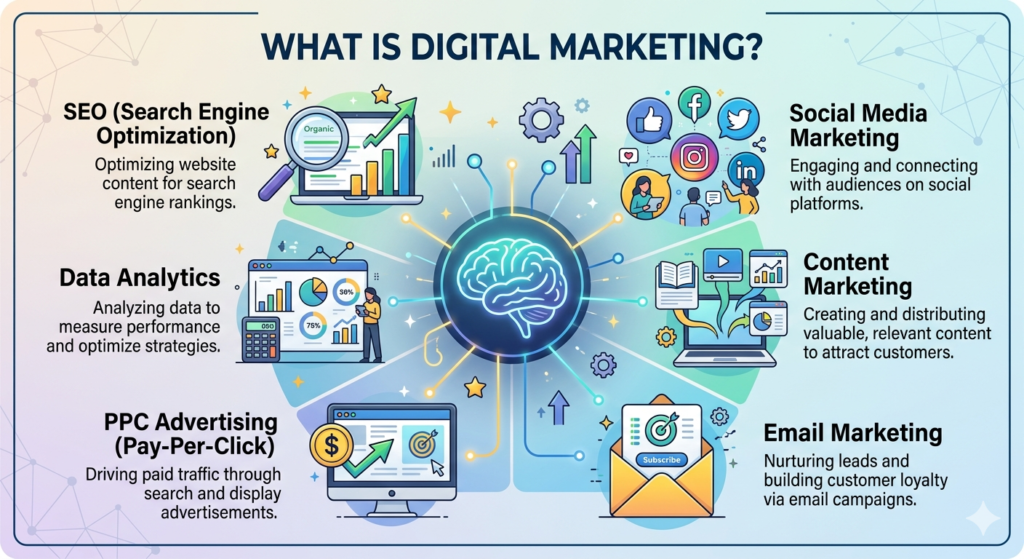
Digital marketing refers to promoting products, services, or brands using digital channels such as:
- Search engines
- Websites
- Social media platforms
- Mobile applications
- Online advertising
Unlike traditional marketing, digital marketing allows businesses to reach highly targeted audiences, track performance in real time, and optimize campaigns based on data.
Benefits of digital marketing include:
- Lower marketing costs
- Global reach
- Better audience targeting
- Measurable results
- Improved customer engagement
- Higher return on investment
Why Learn Digital Marketing?
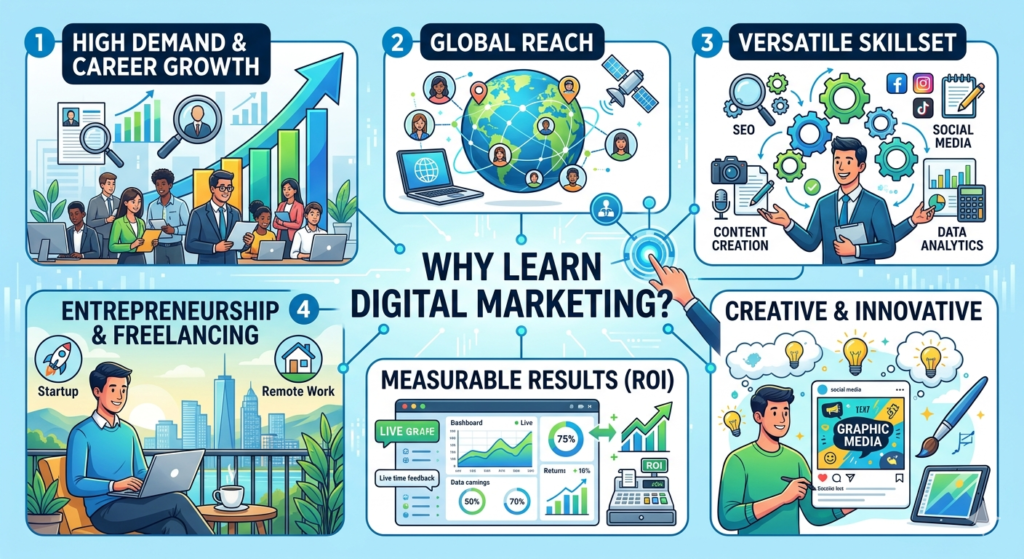
Digital marketing is one of the most dynamic and rewarding fields to enter in today’s economy. Here is an illustrative breakdown of the primary reasons to learn digital marketing:
1. High Demand and Career Growth
Businesses of all sizes, from startups to global corporations, need a digital presence to survive. This creates a massive demand for skilled digital marketers across numerous industries, often leading to rapid career progression.
2. Global Reach
Unlike traditional marketing, digital marketing allows you to reach a targeted audience worldwide. This gives businesses and professionals the power to operate on a global scale.
3. Versatile Skillset
Learning digital marketing equips you with a wide array of specialized skills, including:
- SEO (Search Engine Optimization): Improving visibility on search engines.
- Social Media: Managing and engaging communities online.
- Content Creation: Creating compelling videos, blogs, and graphics.
- Data Analytics: Using data to make informed decisions.
4. Entrepreneurship & Freelancing
Digital marketing skills are invaluable for launching your own business. They also open doors to freelancing, allowing you to work remotely and choose your own clients.
5. Measurable Results (ROI)
One of the key advantages of digital marketing is the ability to track every click, view, and conversion. This focus on data allows marketers to precisely measure their Return on Investment and optimize campaigns for maximum effectiveness.
6. Creative & Innovative
Digital marketing is inherently creative, allowing professionals to innovate new ways to capture attention and build brand loyalty through unique campaigns, design, and storytelling.
As businesses continue shifting online, digital marketing professionals will remain valuable in the job market.
Stage 1: Understand the Digital Marketing Ecosystem
Before diving into specific channels, it is important to understand how digital marketing works as a complete system.
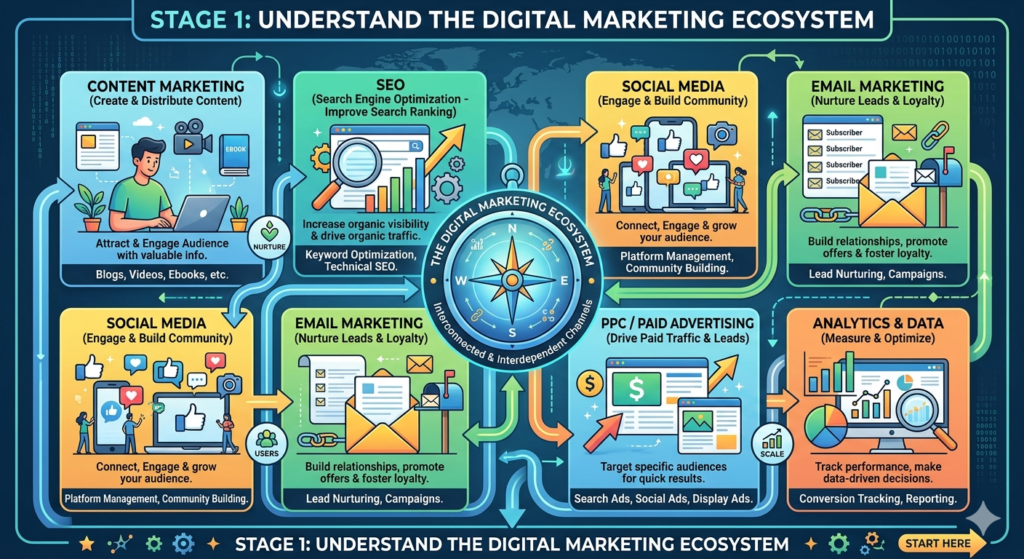
The major components include:
Search Engine Optimization (SEO)
SEO helps websites rank higher on search engines like Google.
SEO includes:
- Keyword research
- On-page SEO
- Technical SEO
- Link building
- Content optimization
Content Marketing
Content marketing focuses on creating valuable content that attracts and engages audiences.
Examples:
- Blog posts
- Videos
- Infographics
- Guides
- Case studies
Social Media Marketing
Businesses use social media platforms to connect with customers and promote products.
Popular platforms:
- X (Twitter)
- YouTube
Email Marketing
Email marketing helps businesses communicate directly with subscribers and customers.
Paid Advertising
Paid advertising allows businesses to quickly reach targeted audiences through:
- Google Ads
- Facebook Ads
- Instagram Ads
- LinkedIn Ads
Stage 2: Learn Website Fundamentals
Every digital marketing strategy needs a website.
A website acts as the central hub for all marketing activities.
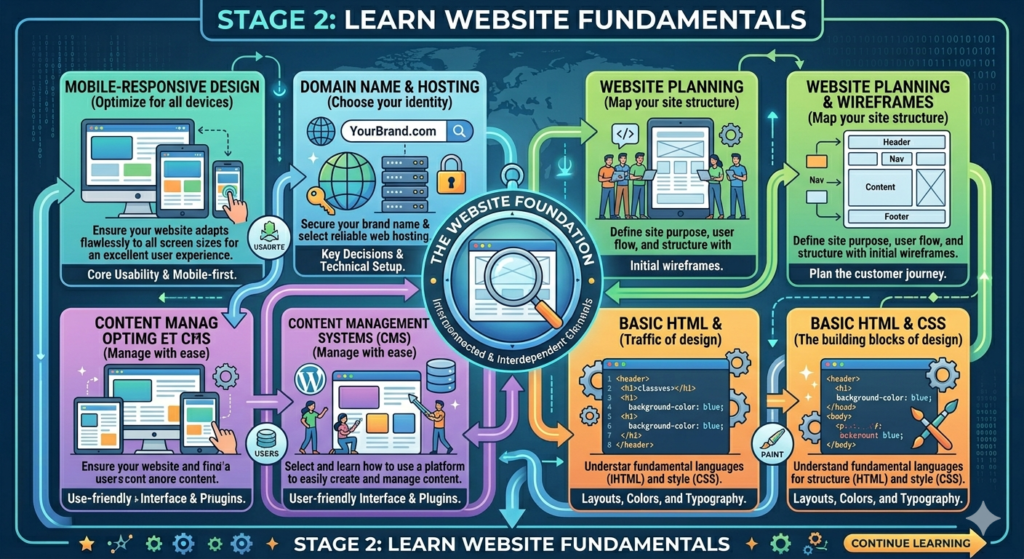
Important website concepts include:
Domain Name
Your website address.
Example:
Web Hosting
Hosting stores website files and makes them accessible online.
WordPress
WordPress powers a large percentage of websites worldwide and is beginner-friendly.
Key WordPress skills:
- Installing themes
- Creating pages
- Publishing blog posts
- Managing plugins
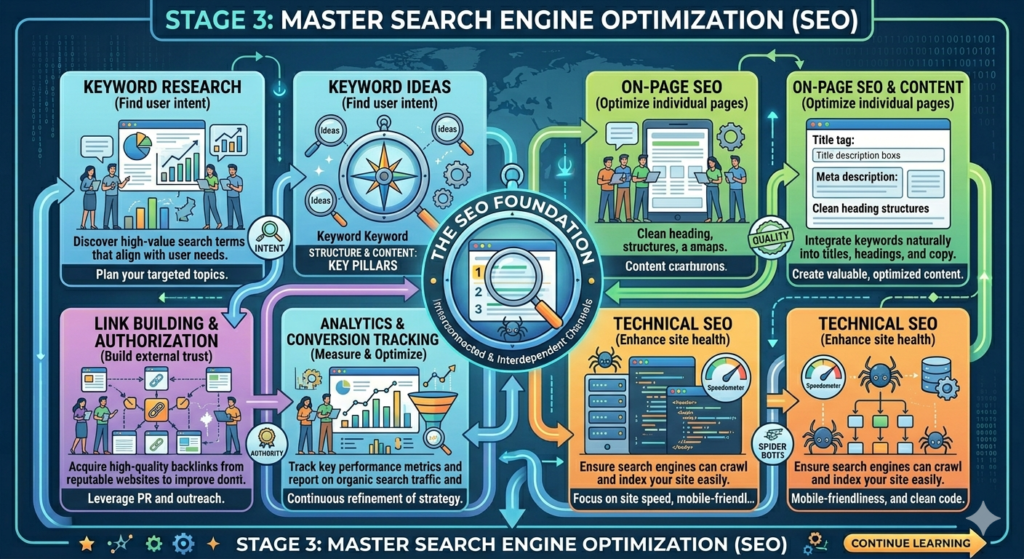
Stage 3: Master Search Engine Optimization (SEO)
SEO is one of the most valuable digital marketing skills because it generates free organic traffic.
Keyword Research
Keyword research helps identify what people are searching for online.
Popular tools:
- Google Keyword Planner
- Google Trends
- Ubersuggest
- Ahrefs
- SEMrush
Focus on:
- Search volume
- Competition
- Search intent
On-Page SEO
On-page SEO involves optimizing website pages.
Important elements:
- Title tags
- Meta descriptions
- Headings
- URLs
- Internal links
- Image optimization
Technical SEO
Technical SEO focuses on website performance.
Key factors:
- Page speed
- Mobile-friendliness
- XML sitemaps
- Crawlability
- Structured data
Link Building
Backlinks act as votes of confidence for your website.
Methods include:
- Guest blogging
- Resource pages
- Outreach campaigns
- Digital PR
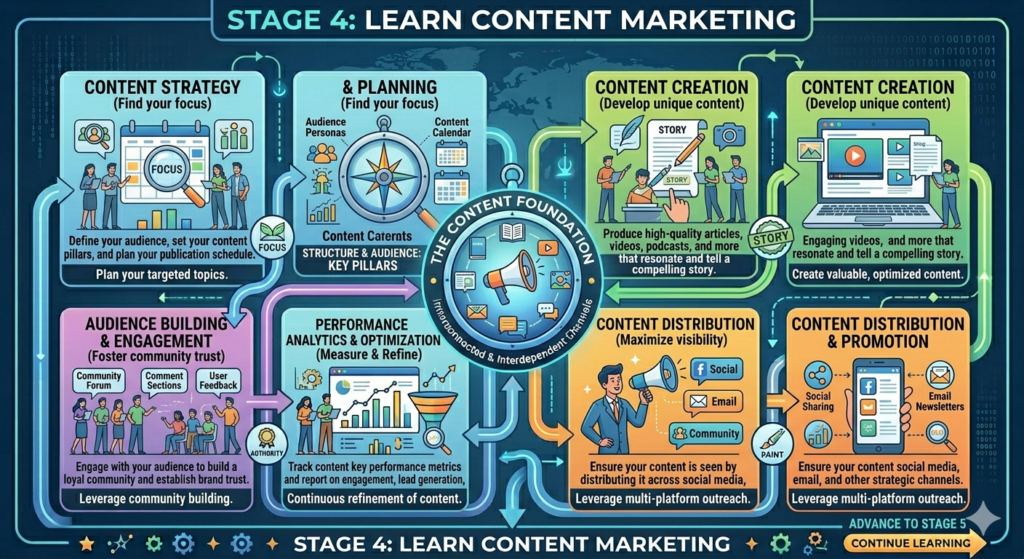
Stage 4: Learn Content Marketing
Content is the foundation of digital marketing.
High-quality content attracts visitors and builds trust.
Types of Content
Blog Posts
Great for SEO and audience education.
Videos
Excellent for engagement and brand awareness.
Infographics
Simplify complex information.
E-books
Useful for lead generation.
Case Studies
Show real-world success stories.
Stage 5: Develop Social Media Marketing Skills
Social media helps businesses build relationships with audiences.
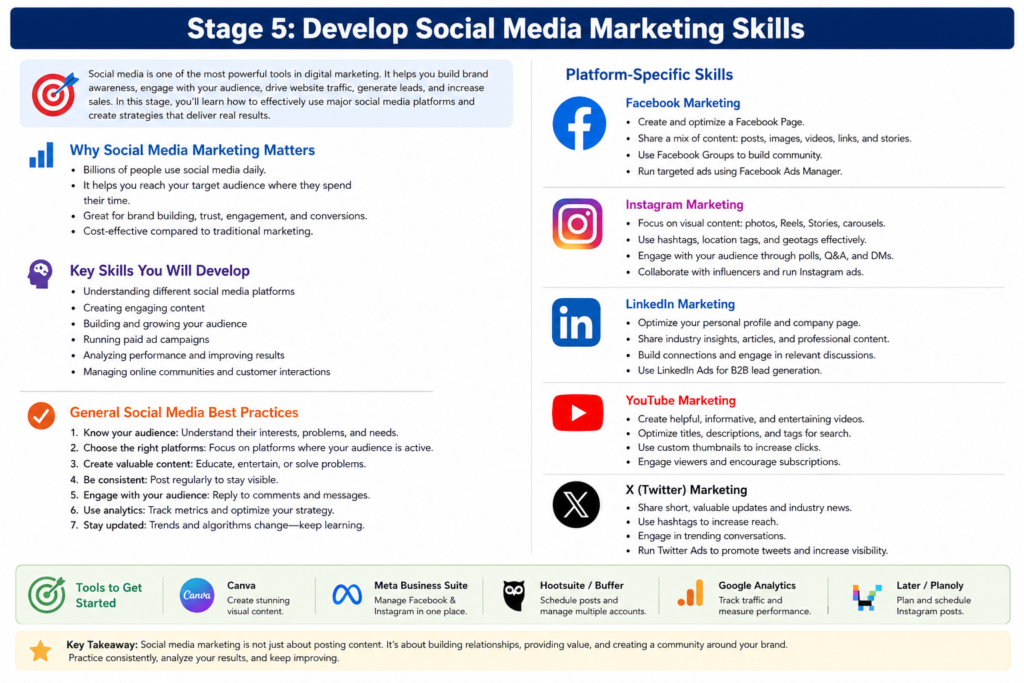
Facebook Marketing
Useful for:
- Community building
- Paid advertising
- Brand awareness
Instagram Marketing
Effective for:
- Visual storytelling
- Product promotion
- Influencer marketing
LinkedIn Marketing
Ideal for B2B marketing and professional networking.
YouTube Marketing
Video content continues to grow rapidly.
Benefits include:
- Increased engagement
- Improved trust
- Better search visibility
Stage 6: Understand Email Marketing
Email marketing remains one of the highest ROI digital marketing channels.
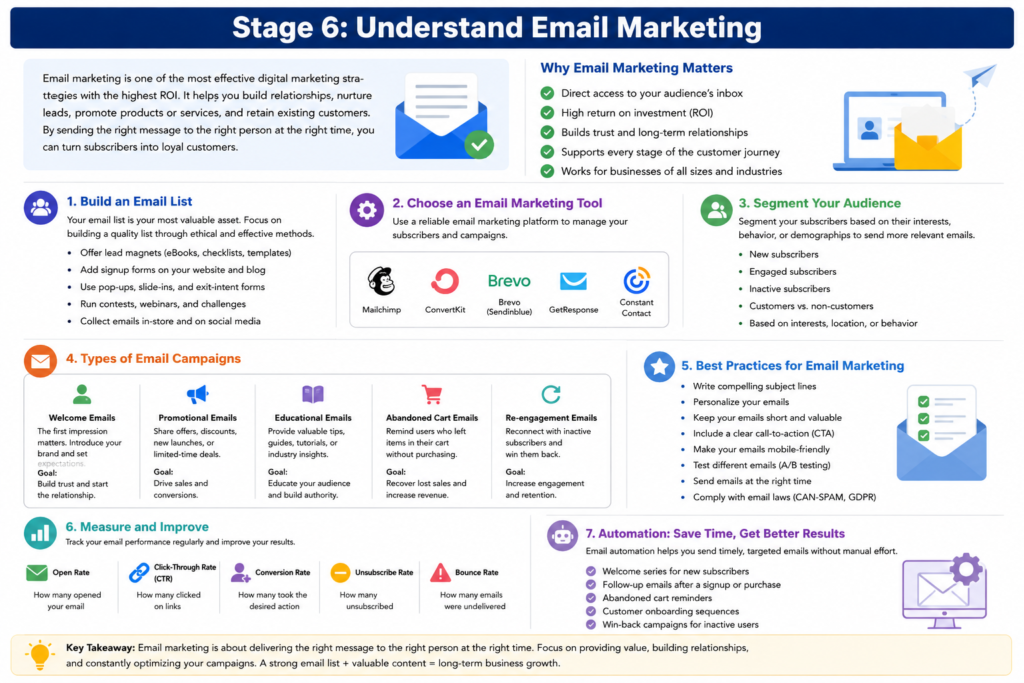
Build an Email List
Methods include:
- Lead magnets
- Newsletters
- Free downloads
- Webinars
Email Types
Welcome Emails
Introduce subscribers to your brand.
Promotional Emails
Drive sales and conversions.
Educational Emails
Build trust and authority.
Retention Emails
Encourage repeat purchases.
Stage 7: Learn Paid Advertising
Paid advertising generates traffic quickly.
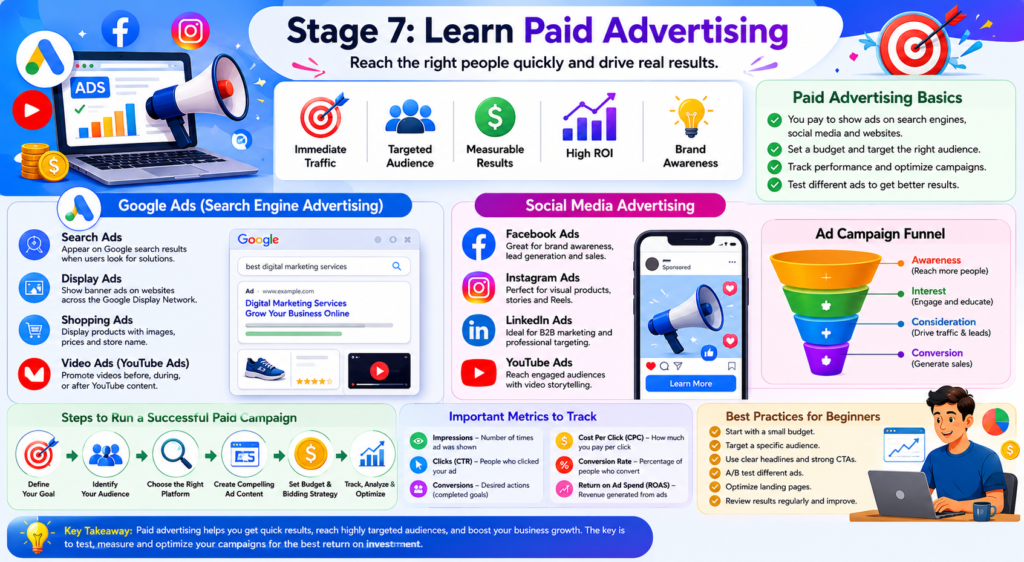
Google Ads
Google Ads target users actively searching for products and services.
Campaign types:
- Search Ads
- Display Ads
- Shopping Ads
- Video Ads
Social Media Advertising
Platforms include:
- Facebook Ads
- Instagram Ads
- LinkedIn Ads
- YouTube Ads
Stage 8: Learn Analytics and Reporting
Successful marketers make decisions based on data.
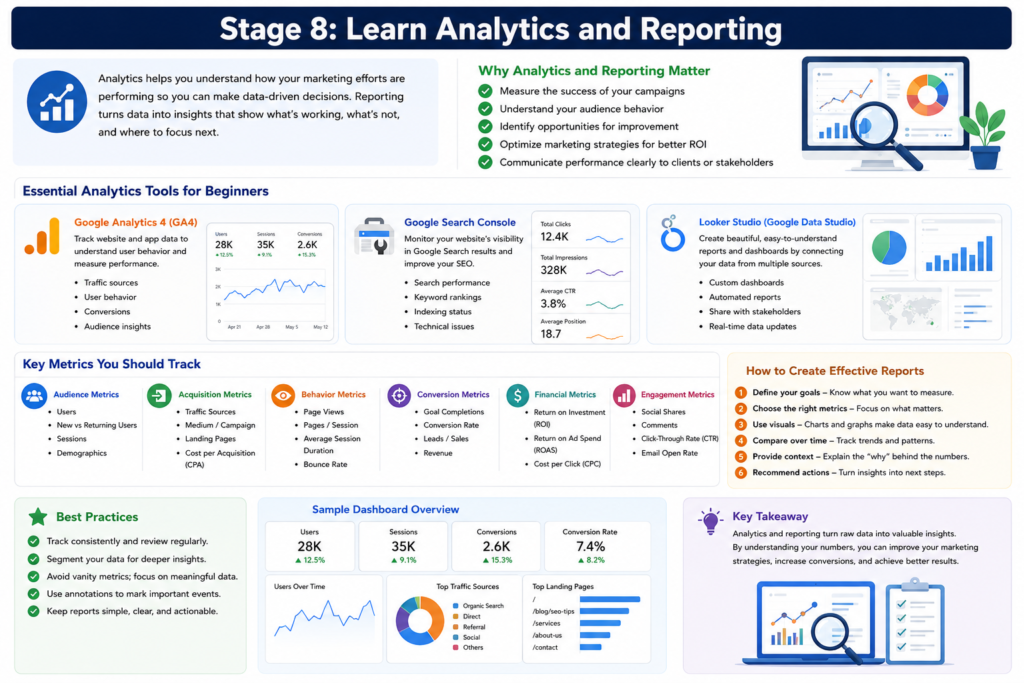
Track metrics such as:
- Website traffic
- Conversion rates
- Bounce rate
- Click-through rate
- Return on investment
Important tools:
- Google Analytics
- Google Search Console
- Looker Studio
Stage 9: Learn Conversion Rate Optimization (CRO)
Traffic alone is not enough.
Conversion optimization helps turn visitors into customers.
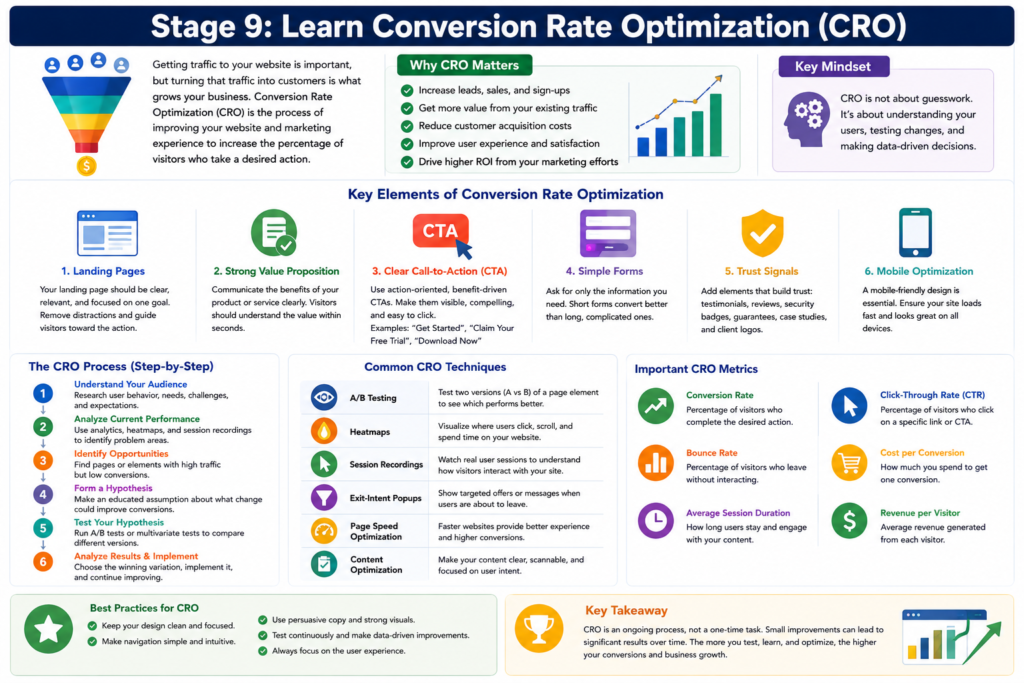
Focus on:
- Landing pages
- Calls-to-action
- Forms
- User experience
- A/B testing
Small improvements can significantly increase revenue.
Stage 10: Build Personal Projects
The fastest way to learn digital marketing is through practical experience.
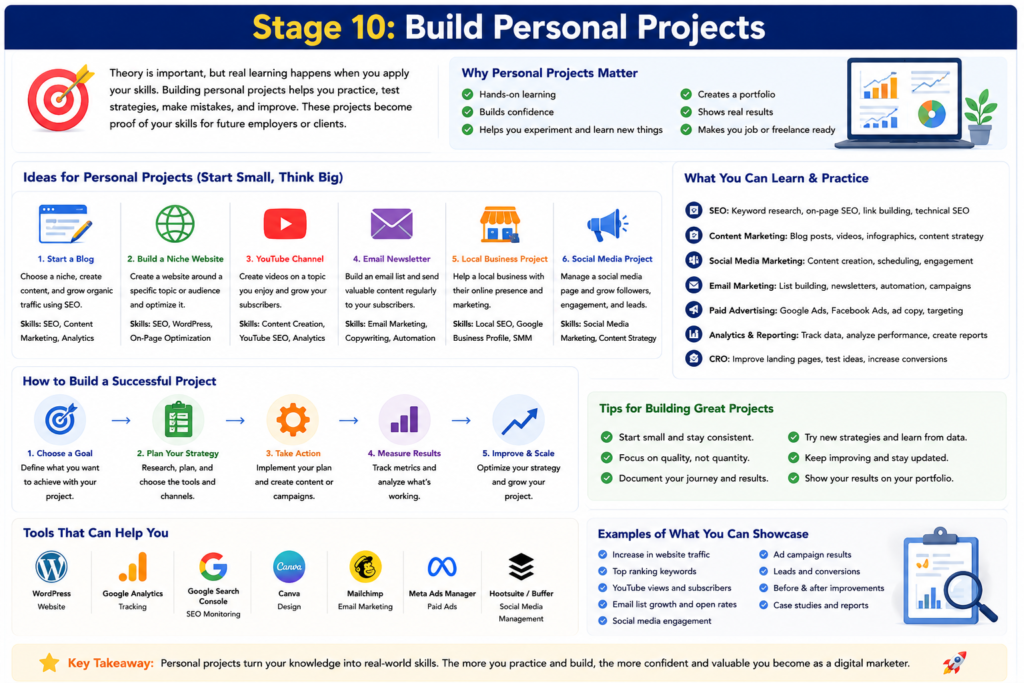
Start:
- A blog
- A niche website
- A YouTube channel
- A local business website
Experiment with:
- SEO
- Content marketing
- Social media
- Email campaigns
Real-world experience accelerates learning.
Stage 11: Build Your Portfolio
Employers and clients value results more than certificates.
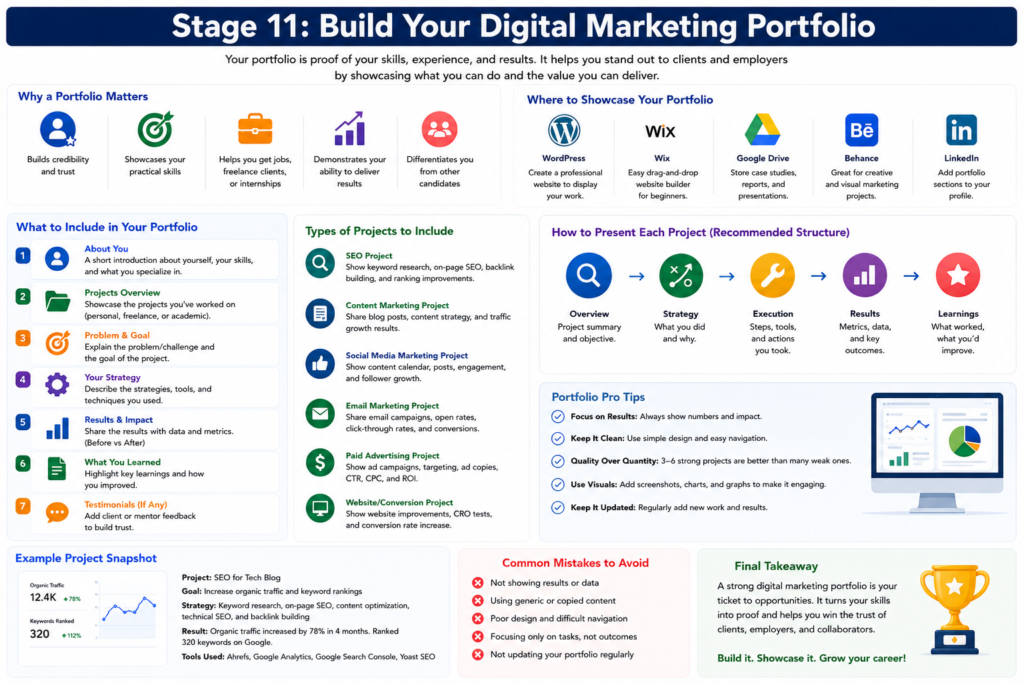
Include:
- SEO projects
- Website audits
- Content samples
- Social media campaigns
- Analytics reports
Show measurable outcomes whenever possible.
Stage 12: Stay Updated
Digital marketing changes constantly.
Follow:
- Industry blogs
- Marketing podcasts
- YouTube channels
- Industry newsletters
Continuous learning is essential for long-term success.
Common Mistakes Beginners Should Avoid
Many beginners make avoidable mistakes.
Common errors include:
- Ignoring SEO
- Publishing low-quality content
- Not tracking analytics
- Buying fake followers
- Expecting instant results
- Neglecting mobile optimization
- Inconsistent publishing
Avoiding these mistakes can accelerate progress.
Recommended Learning Timeline
Month 1
- Learn website basics
- Understand SEO fundamentals
- Create a WordPress website
Month 2
- Learn keyword research
- Publish blog content
- Understand on-page SEO
Month 3
- Learn social media marketing
- Start email marketing
- Install analytics tools
Month 4
- Learn paid advertising
- Study conversion optimization
Month 5–6
- Build projects
- Create a portfolio
- Analyze results
Career Opportunities in Digital Marketing
Digital marketing offers numerous career paths.
Popular roles include:
- SEO Specialist
- Content Marketer
- Social Media Manager
- PPC Specialist
- Email Marketing Specialist
- Marketing Analyst
- Digital Marketing Manager
Freelancing and consulting opportunities are also growing rapidly.
Future Trends in Digital Marketing
Key trends shaping the future include:
- Artificial Intelligence (AI)
- Voice Search Optimization
- Video Marketing
- Personalization
- Marketing Automation
- Data Privacy
- Interactive Content
Marketers who adapt to these trends will remain competitive.
Conclusion
This Digital Marketing Roadmap for Beginners provides a clear path for anyone looking to start a successful journey in digital marketing. Rather than trying to master everything at once, focus on learning one skill at a time while gaining practical experience through real projects.
Begin with website fundamentals and SEO, then expand into content marketing, social media, email marketing, paid advertising, analytics, and conversion optimization. Over time, these skills will work together to help you create effective marketing campaigns and achieve meaningful business results.
Remember that digital marketing is not about shortcuts or overnight success. Consistency, experimentation, and continuous learning are the keys to long-term growth. By following this roadmap and applying what you learn, you can build valuable skills, grow your online presence, and create exciting career or business opportunities in the digital world.